Visit hbs.edu

Insights

Leading with AI: CustomGPTs

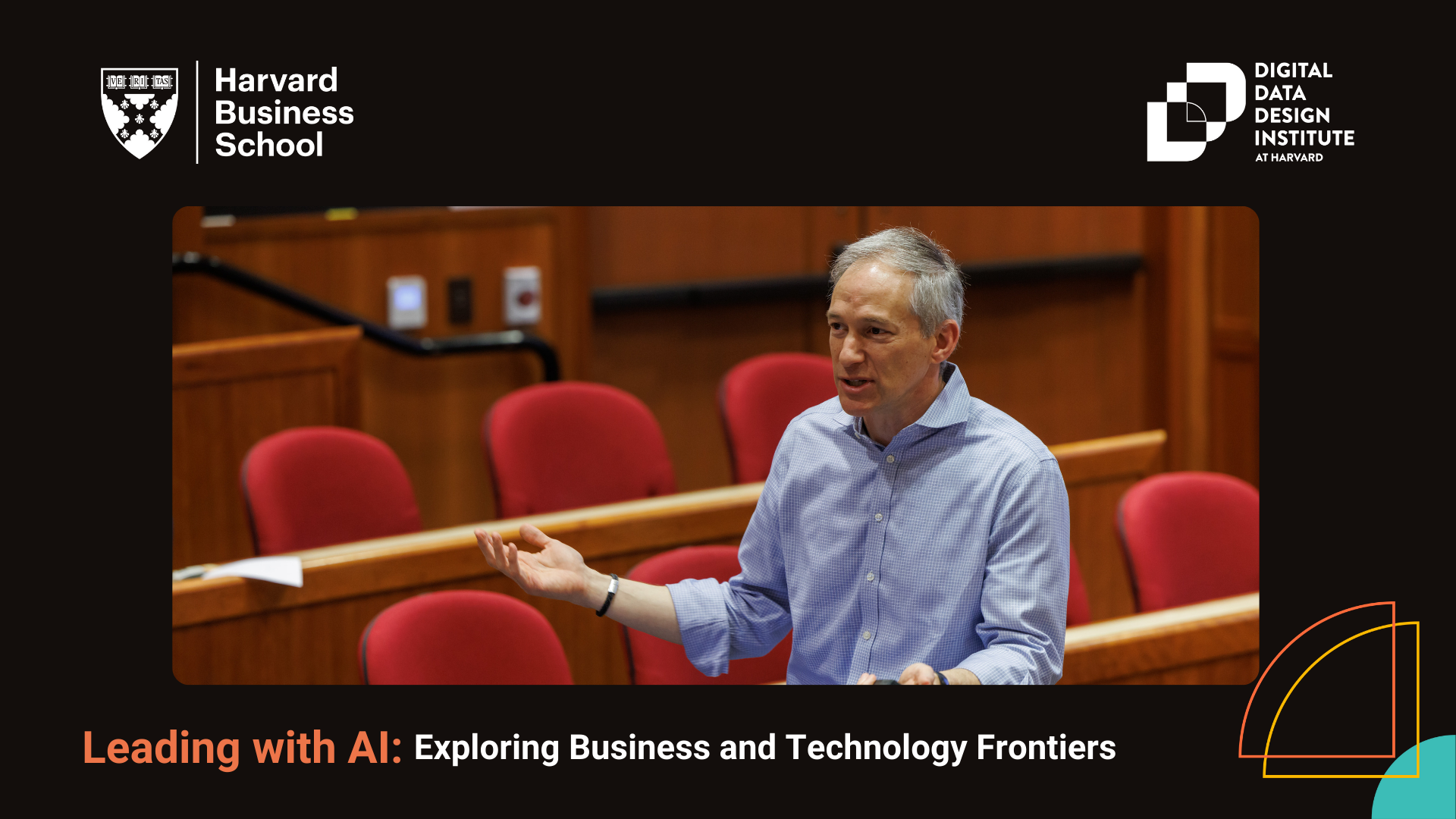
On May 7, the Digital Data Design Institute at Harvard hosted Leading with AI: Exploring Business and Technology Frontiers. During the conference, this breakout session by Jeff Bussgang explores the transformative potential of advanced AI tools in education and business. For lifelong learners, integrating GPTs into their learning journey offers personalized, real-time feedback and support, […]

Startup Foundry Highlights Neru Health

Are you tired all the time? Have trouble sleeping? You’re not alone. According to the Centers for Disease Control and Prevention, about 1-in-3 adults in the United States reported not getting enough rest or sleep every day. For the 20 million shift workers in the US—nurses, doctors, first responders, warehouse workers, truck drivers, etc.— being […]

D^3 in the News

Discover the latest publications from worldwide news outlets on the work of the Digital Data Design Institute at Harvard. Dive in below. Fortune Newsletter You’ll Probably Need to Learn a New Acronym to Keep Up with the Latest AI Trend By: Sage Lazarro InnoLead Four AI Questions Organizations Need to be Discussing By: Scott Kirsner […]

AI-Focused Partnerships Announced with JPMorgan Chase, Microsoft, and Boston Consulting Group

BOSTON – The Digital Data Design Institute at Harvard (D^3) announced today two multi-year corporate partnerships and one research partnership, a first since the Institute’s inception in 2022. The corporate partners include JPMorgan Chase and Boston Consulting Group, who will work with Harvard and Harvard Business School faculty and researchers within their labs at D^3 […]

Insight: How to Radically Transform Business Operations with AI

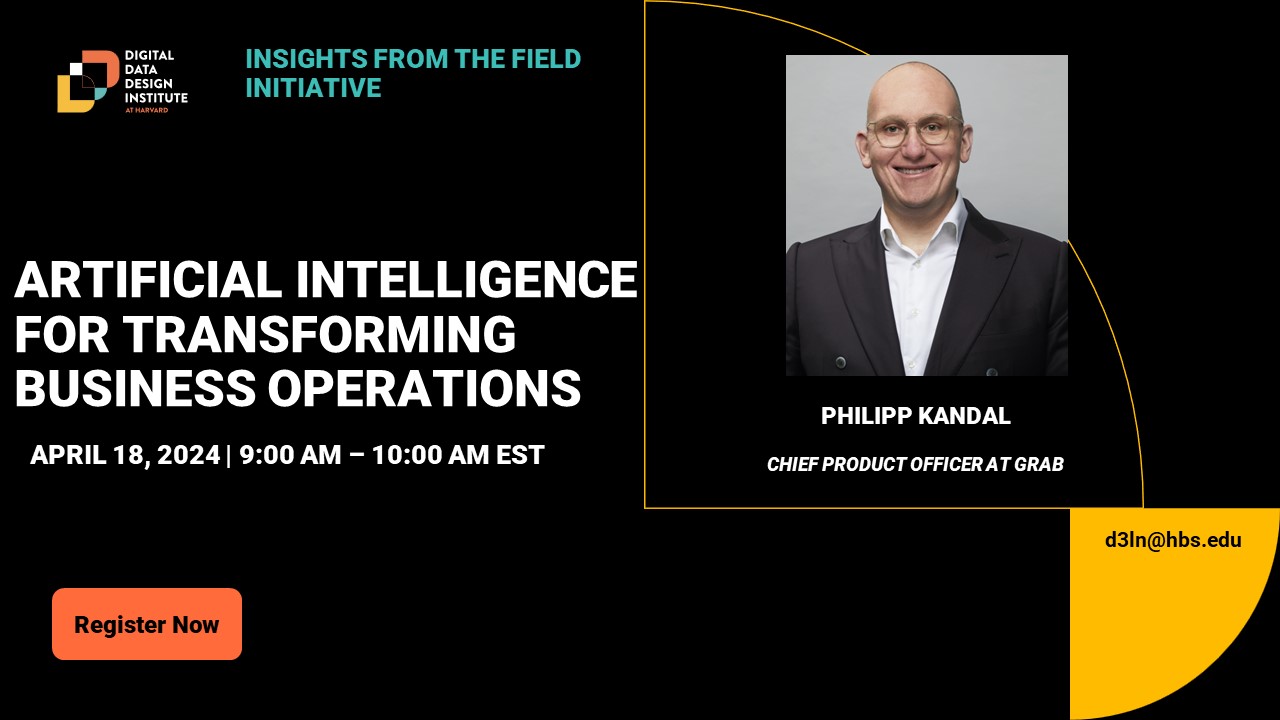
Artificial intelligence has the potential to radically transform the operational aspects of businesses. Delivery businesses are a quintessential example of where such an AI-enabled transformation could occur. For example, companies like Grab (Southeast Asia’s largest all-in-one digital platform provider) employ cutting-edge AI algorithms to enhance overall efficiency of its delivery fleet. Grab leverages complex machine learning algorithms to predict delivery demand and to manage logistics, thereby increasing customer satisfaction. Such applications of AI could help businesses cut down on cost and allocate resources more efficiently, improve the on-the-job experience for their employees, and understand the needs of their customers better to provide the holistic service their customers need when they need it.

Equitable AI

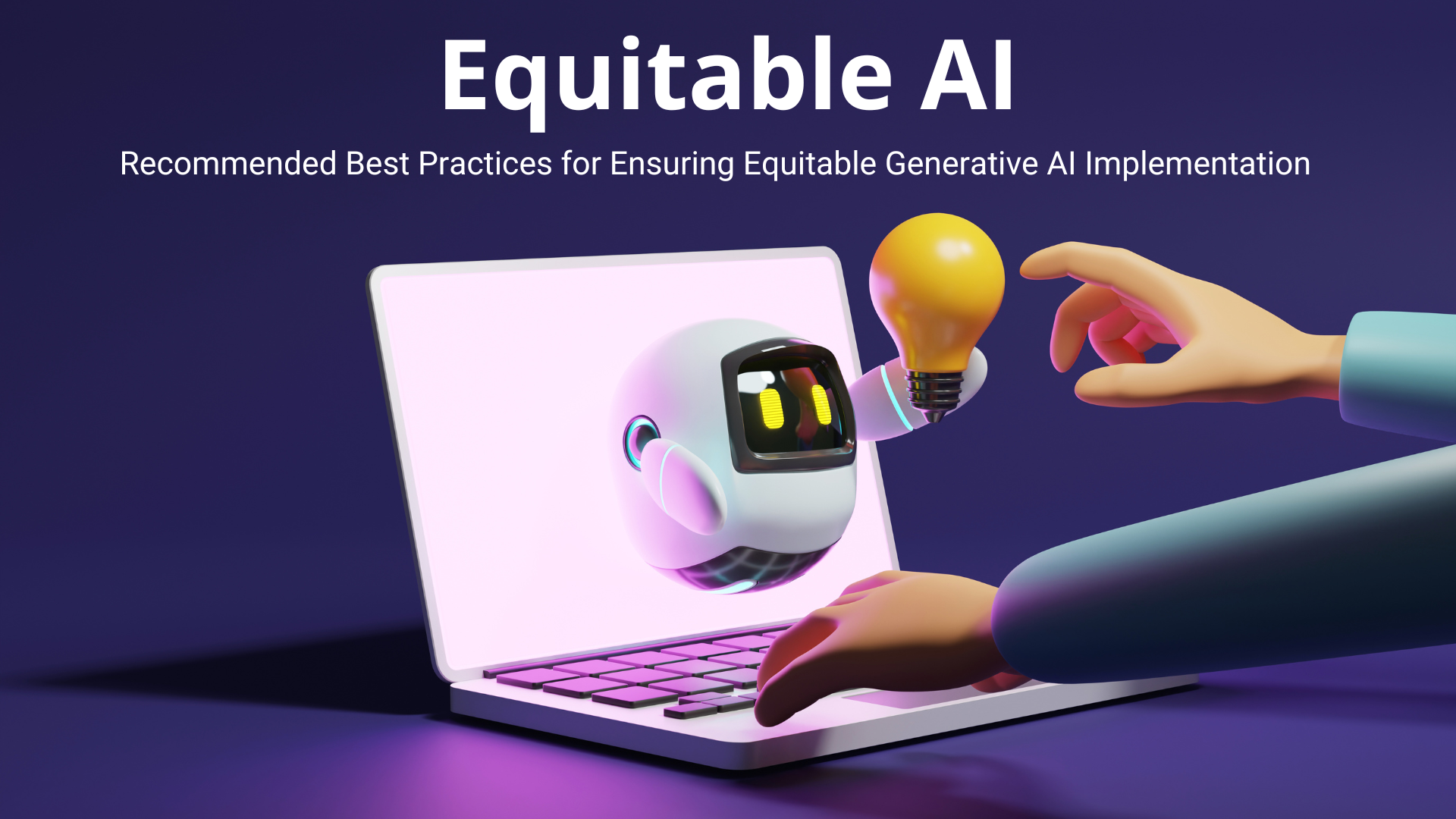
The D^3 Institute recently convened the Generative AI Collaborative Working Group in order to build collective knowledge around the subject of equitable AI implementation. This global, interdisciplinary group of experts gathered weekly to discuss the ways in which generative AI will likely continue to impact various sectors and societies. Through a series of interactive discussions […]

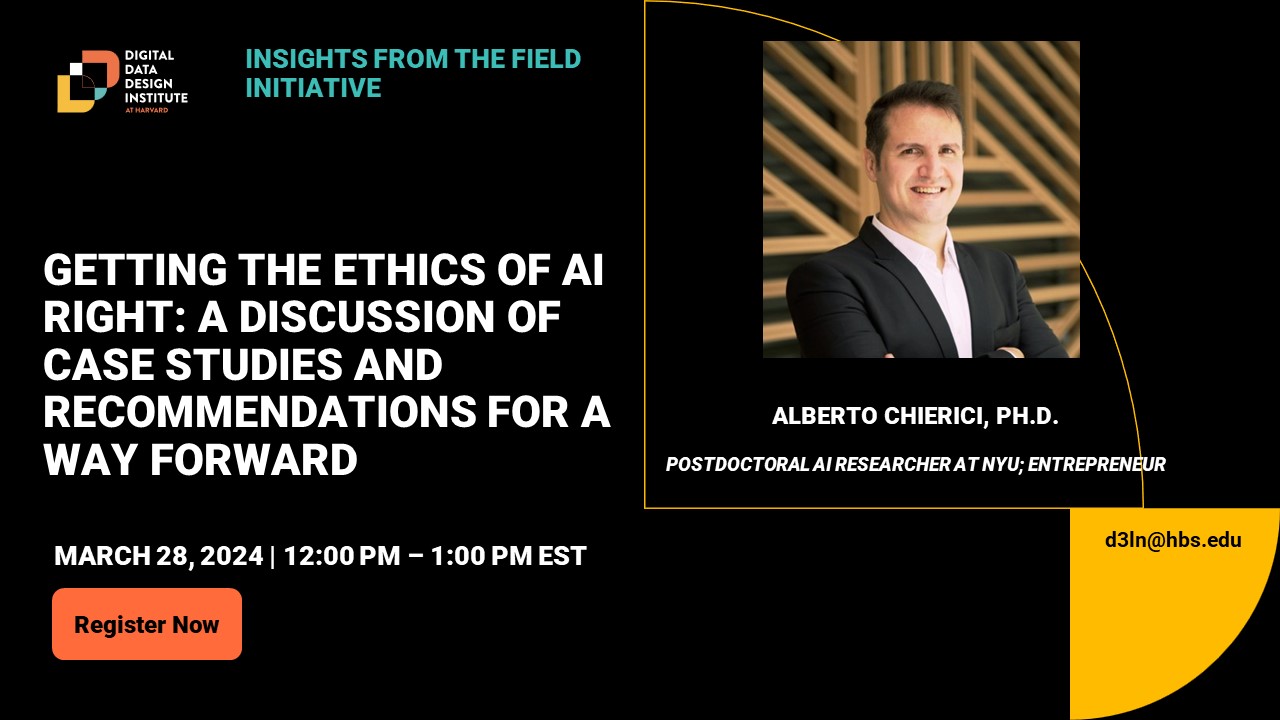
Insight: Helpful Thoughts and Recommendations on AI and Ethics

Although artificial intelligence technology has been around for some time, current advancements in this space warrant more ethical approaches for developing and deploying AI systems to benefit a large portion of society. Artificial intelligence, generative AI in particular,has already shown immense potential to augment human capabilities. This potential, however, doesn’t seem to be evenly distributed. What’s worse, risks such as social and economic disparities are exacerbated by the uneven distribution of artificial intelligence, and are concentrated in specific regions based on demographic characteristics. It’s imperative to strive toward building a framework of transparency, fairness, and accountability around artificial intelligence on a global scale in order to mitigate this problem.

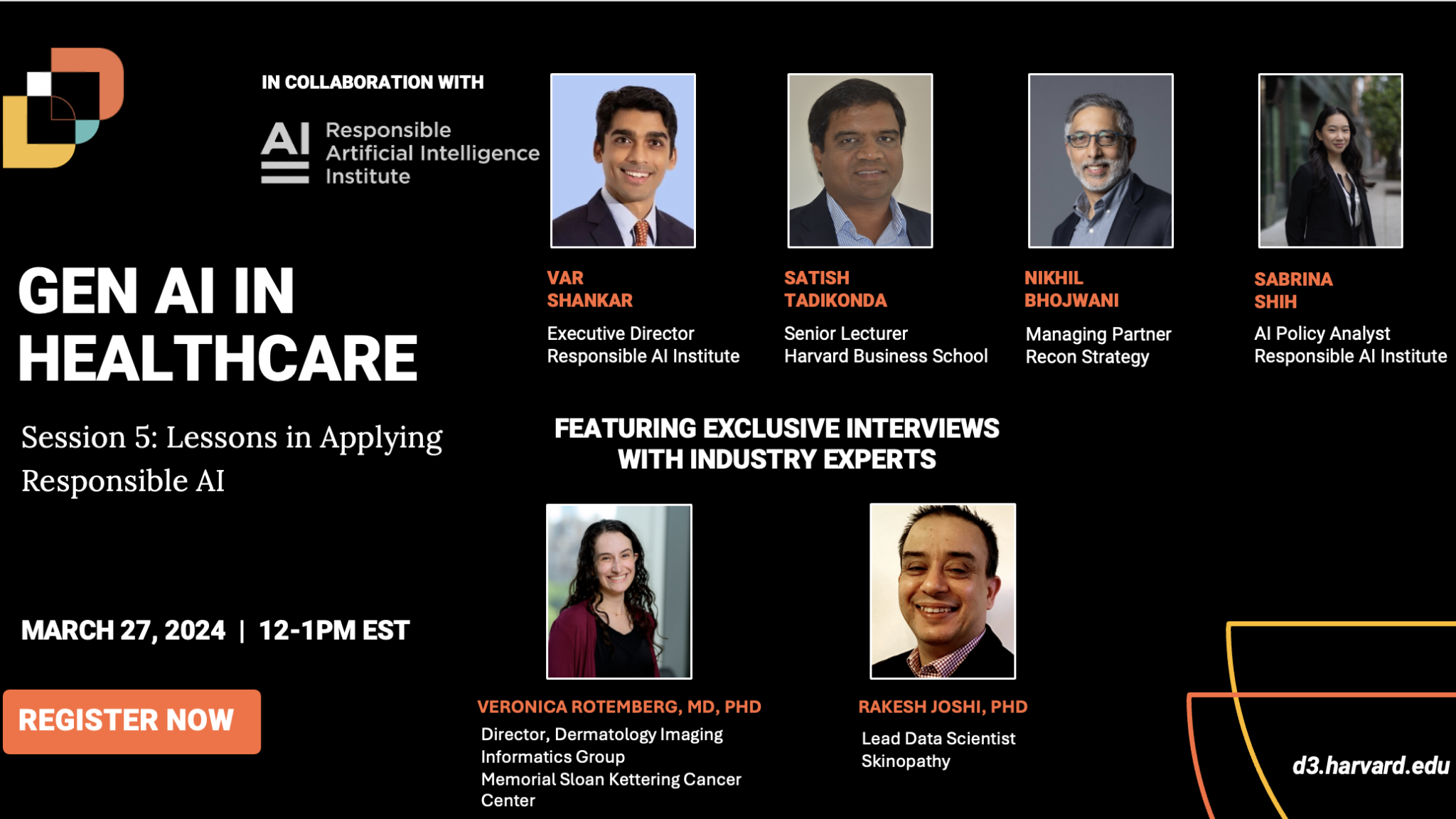
Lessons in Applying Responsible AI

Insights from the March 27th, 2024 capstone session on Gen AI applied use cases, risks, and responsibilities Recordings and articles from the Generative AI in Healthcare series can be found here. In the capstone session of the Generative AI in Healthcare series, Satish Tadikonda (HBS) spoke with Responsible AI Institute experts Manoj Saxena, Var Shankar, […]

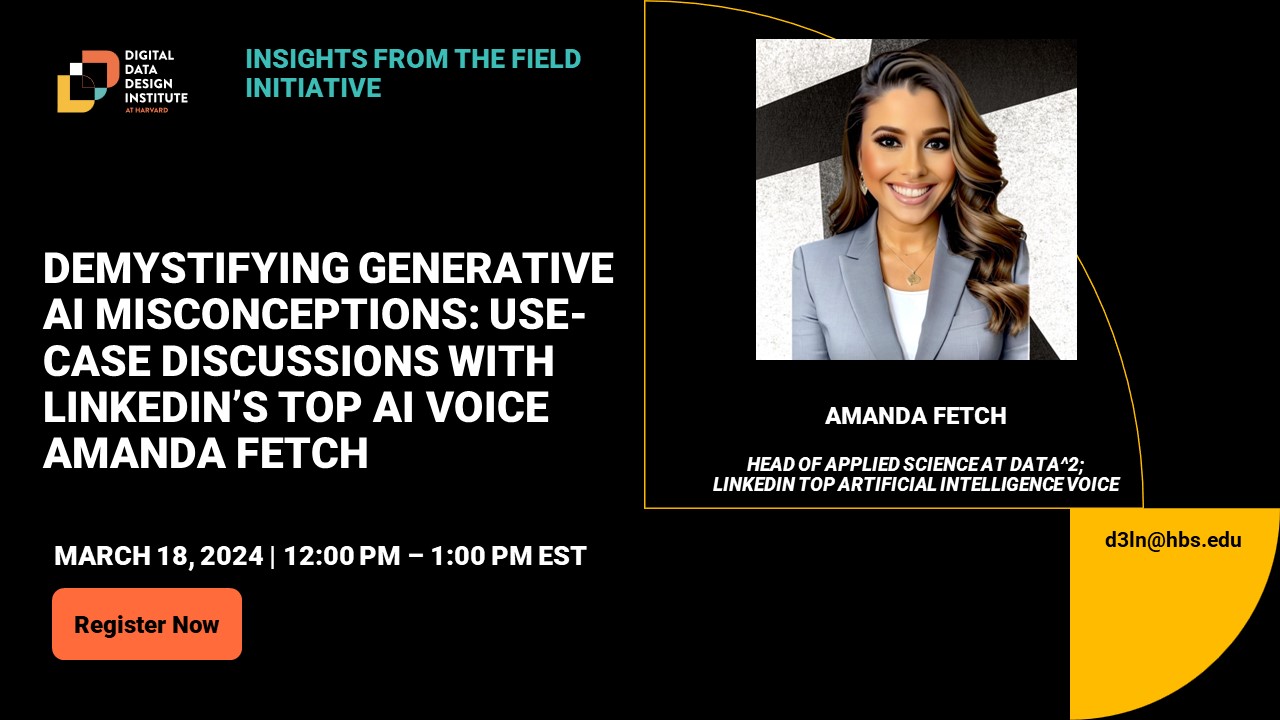
Insight: Common Generative AI Misconceptions and How to Demystify Them

Owing to the accelerated advancement in the field of generative AI technologies, it’s important to address misconceptions about what generative AI tools can and cannot do in order to maximize the benefits and minimize potential harms. In this “Ask me Anything” session, Amanda demystifies some of the most commonly held misconceptions about generative AI via discussions of real-world use cases. While responding to specific questions, Amanda highlights areas in which generative AI seems to thrive, while she also identifies notable shortcomings of the technology by drawing from her diverse and extensive experience as a digital transformation expert and a sought-after advisor to leading organizations in artificial intelligence and machine learning technologies.

Engage With Us

Join Our Community

Ready to dive deeper with the Digital Data Design Institute at Harvard? Subscribe to our newsletter, contribute to the conversation and begin to invent the future for yourself, your business and society as a whole.