Industry 4.0
It is no surprise that the inception of the Industrial Revolution remains an epicenter for innovation and growth in the digital economy. Smart factories, advancements in supply chain management, and transformations of traditional manufacturing relationships – all are markers of the new face of industry in the digital age.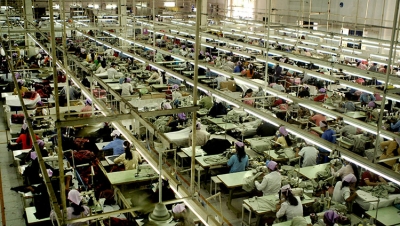
- AI & Future of Business Technology
- Data, Privacy, Security, and Regulation
- Human-Centered Technology
Scaling AI Applications
Insights from the December 13th, 2023 session on Gen AI use cases in the BioPharma sector.

- AI & Future of Business Technology
- Data, Privacy, Security, and Regulation
- Human-Centered Technology
Realizing Healthcare’s AI Potential
The following insights are derived from a recent session on GenAI in Healthcare. On November 15th, the D^3 Institute’s Generative AI Observatory hosted the first session in its GenAI in Healthcare series, produced in collaboration with the Responsible AI Institute. Speakers Satish Tadikonda (HBS), Nikhil Bhojwani (Recon Strategy), Var Shankar (Responsible AI Institute), and Alyssa […]
Data Contracts: Data Quality for AI
The following insights are derived from a recent Insights from the Field event featuring Chad Sanderson, covering the topic of Data Contracts for achieving high-quality data for Artificial Intelligence (AI). Overview Chad began this session by demystifying some hyperbolic claims in the world of Artificial Intelligence (AI), including the idea that AI models could replace […]

Using Analytics to Find Value in Education Data
The following insights are derived from a recent Assembly talk featuring Hywel Benbow, regarding applying data analytics to enhance the performance of educational institutions. We presented a few question to Hywel during this talk, and what follows is a summary of his responses. Could you speak to some overarching and generalizable ways educational organizations could […]

Revitalize, Reinvent, Reskill: Unlocking Workforce Productivity
On October 22-23, the Digital Reskilling Lab hosted the “Revitalize, Reinvent, Reskill: Unlocking Workforce Productivity” conference, a collaborative effort between the Digital Data Design Institute at Harvard and Managing the Future of Work at Harvard Business School. This event convened business leaders and reskilling practitioners to engage in discussions on reskilling methodologies and share cutting-edge […]


The Impact of Innovation Contests in Federally Qualified Health Centers
The following insights are derived from a recent Assembly talk featuring Olivia Jung, PHD, and Andrea Dorbu, MPH on Innovation Contests in Federally Qualified Health Centers in the United States. In this talk, Andrea and Olivia discussed a research project that they conducted across 54 Federally Qualified Health Centers (FQHCs) in the United States to […]

Tech For All Lab Explores Innovation in Women’s Health
Historically, there has been limited attention and innovation in addressing issues like menopause, endometriosis, and menstrual health. This is partly due to the underrepresentation of women as inventors and entrepreneurs. However, some exceptional women like Geetha Manjunath and Linda Griffith have made significant contributions by leveraging their personal experiences and expertise. Geetha Manjunath, with a […]
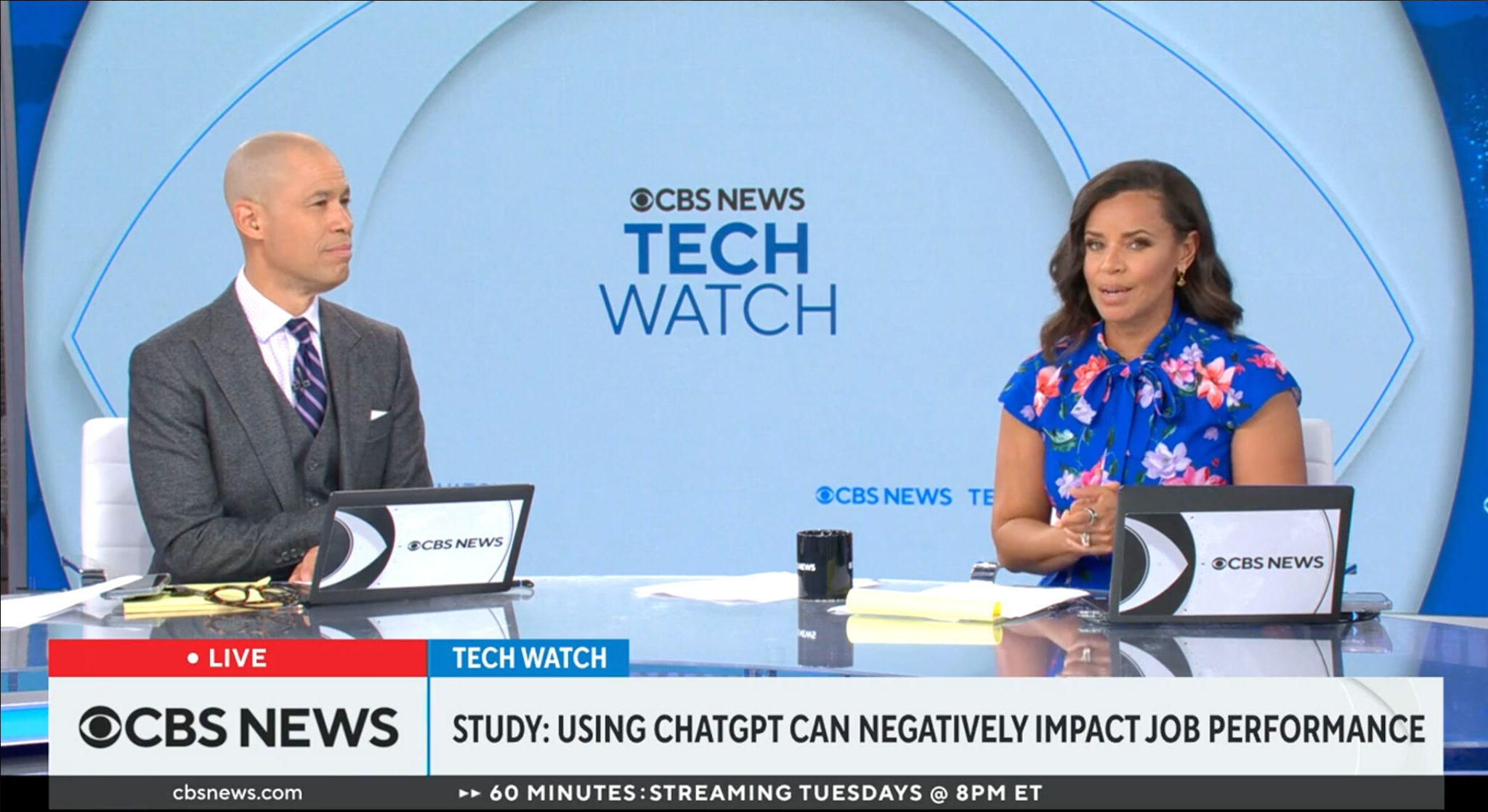
D^3 Research Featured on CBS News
In collaboration with Boston Consulting Group (BCG), new research from Digital Data Design Institute at Harvard chair and co-founder Karim Lakhani Karim R. Lakhani and others explores field experimental evidence of the effects of AI on knowledge worker productivity and quality. It involved evaluating the performance of 758 consultants, which make up 7% of the individual […]