The Digital Data Design Institute at Harvard is now the Harvard Business School AI Institute.

Insights

How Tech Companies Can Help Upskill the U.S. Workforce

In 2015, there were 7 million jobs that required some level of coding, but the number of workers with those skills hasn’t kept up with demand. Could provide better access to technical learning for those who work in lower-paying industries provide the answer? Kausik Rajgopal and Steve Westly think so.

Liberal arts in the data age

What are humanities good for? It turns out, in today’s complex and interrelated modern world, quite a lot. In this piece from the Harvard Business Review, J.M. Olejarz deconstructs the false dichotomy between liberal arts and STEM fields and argues that humanities majors have much to offer in the digital economy.

Your Biggest Asset is Now Your Biggest Risk

The majority of spending on cybersecurity efforts goes towards protecting organizations from external hackers. The truth is, though, that the majority of security breaches actually come from within an organization. Learn how to protect your organization with this primer on developing insider threat programs from ObserveIT.

Technology innovation abounds, but what does it really mean for us all?

What are the meaningful implications of technological innovation? This is the question Janet Balis (MBA ’99) found herself asking at this year’s Consumer Electronics Show (CES). Breaking down her key insights from the conference, Balis offers several salient and thought-provoking questions for those seeking to derive more impact from innovation than simply shiny, exciting new gadgets.

The Algorithm for Precision Medicine

Five years ago, Matt Might’s son Bertrand was dying, stranded on Undiagnosed Island, and suffering from an unnamed and extremely rare genetic disorder. What happened next was a remarkable journey to wellness which included viral blog posts, regenerative worms, one White House mandated initiative, and some arguably shady Amazon orders. In this talk from the Harvard Institute for Applied Computational Science’s Digital Doctor Symposium, Matt Might lays out his bold vision for the future of precision medicine, one that relies on data-driven insights, powerful computation and machine learning, and an invitation to patients to dive feet-first into the scientific method along with their clinicians.

Could a hackathon help solve the heroin crisis?

Is crowdsourcing really the proper strategy for tackling a health crisis as severe as the opioid epidemic? We admit to having our doubts. However, this case from Professor Mitch Weiss addresses those underlying skepticisms and offers a fascinating look at what can happen when innovative minds use creative tactics to get disparate stakeholders for a desperate problem in the same room together so they can finally start talking.

The IT transformation healthcare needs

As tempting as it is to think only of the shiny, exciting advancements that technology provides (here’s looking at you, AI), the reality is that most organizations are in need of more basic digital transformation. Nowhere is this truer than in the healthcare industry, where IT systems that support process improvement and innovation are hard to come by. This article from the Harvard Business Review makes the case for importance of IT management and data interoperability within healthcare and argues that such investments can both lower costs and improve quality.

Case Study: Adaptive Platform Trials-The Clinical Trial of the Future?

While still the gold standard in clinical research, randomized controlled trials can be costly, time-consuming, and limited in their scope. This case from Professor Ariel Stern explores the potential of an innovative new approach to clinical trials and cancer therapies – adaptive platform trials. Could this design offer a more flexible and efficient way forward for clinical trials as a whole?

Man fishing with fitbit

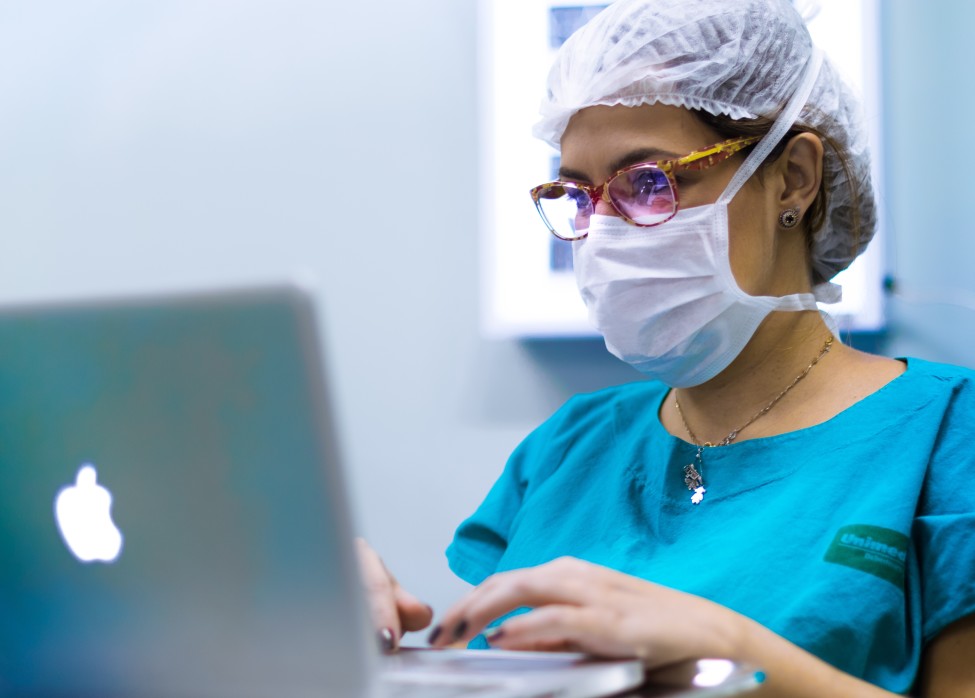
Clinical trials are in need of a digital makeover

Healthcare companies are lagging behind. Oftentimes, clinical trial research still uses old-school processes like physical protocol binders, paper diaries, and decade old-software. Furthermore, only 5% of the U.S. population participates in clinical research. Andrea Coravos (MBA ’17) believes the time is ripe for innovative technologies – from virtual trials and digital biomarkers to improved software tools – to improve clinical trial execution and encourage broader participation from the public.

Blockchain 101: the primer we still need

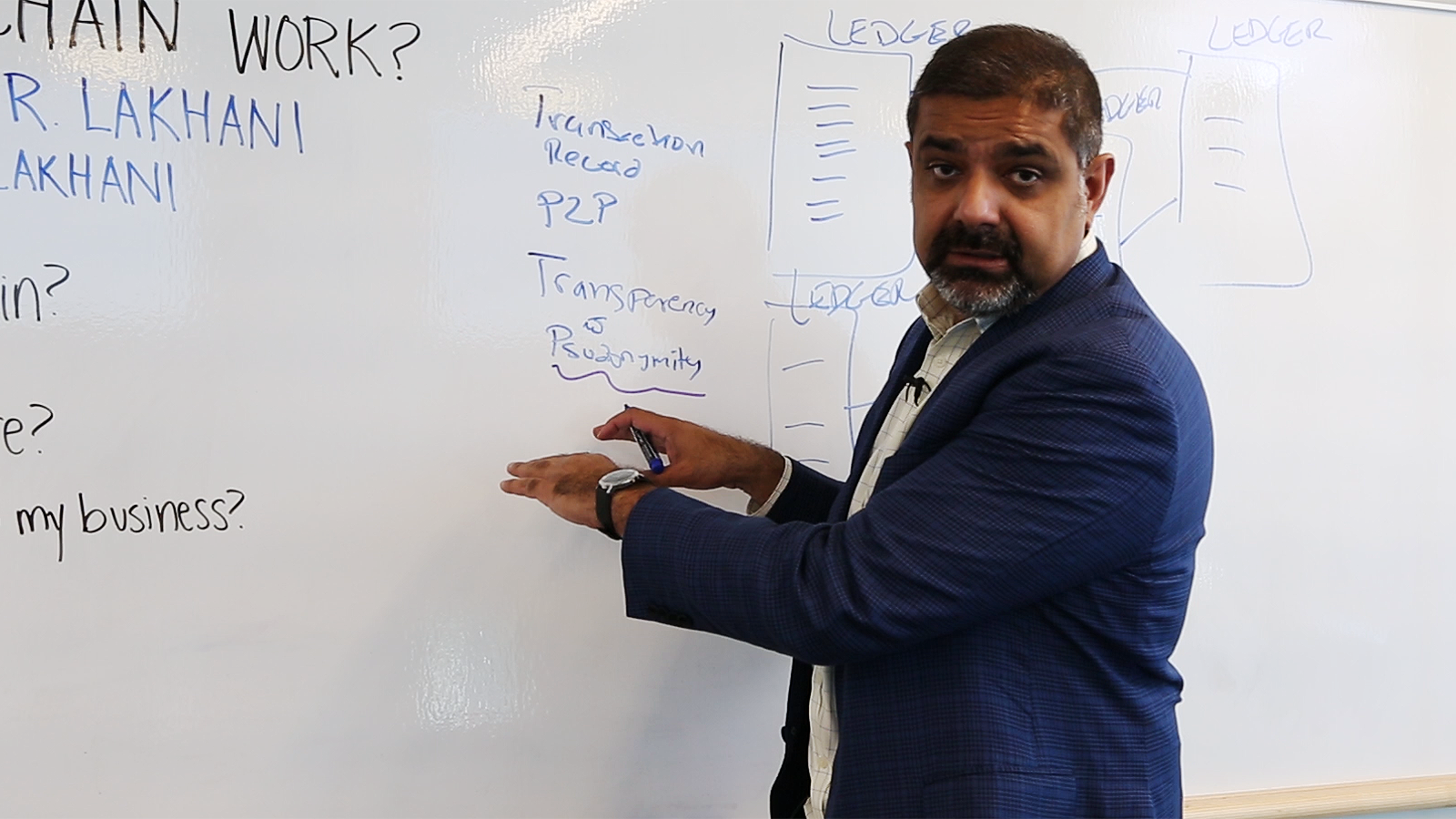
Just getting started learning about blockchain? This primer from DI professor, Karim Lakhani is the place to start. In this HBR Whiteboard Session, Professor Lakhani explains how the blockchain works and why we should care. Finally, Lakhani provides a brief roadmap for leaders looking to implement the promising technology within their own organizations.

Engage With Us

Join Our Community

Ready to dive deeper with the HBS AI Institute? Subscribe to our newsletter, contribute to the conversation and begin to invent the future for yourself, your business and society as a whole.