

As Gen AI technology continues to rapidly evolve and LLMs are integrated into more and more applications, questions of trustworthiness and ethical alignment become increasingly crucial. In the recent study “Generalizing Trust: Weak-to-Strong Trustworthiness in Language Models,” authors Martin Pawelczyk, postdoctoral researcher at Harvard working on trustworthy AI; Lillian Sun, undergraduate student at Harvard studying computer science; Zhenting Qi, PhD student in computer science at Harvard; Aounon Kumar, postdoctoral research associate at Harvard working on trustworthy AI; and Himabindu Lakkaraju, Assistant Professor of Business Administration at Harvard Business School and PI in D^3’s Trustworthy AI Lab, explore a novel concept: the ability to transfer and enhance trustworthiness properties from smaller, weaker AI models to larger, more powerful ones.
Key Insight: The Three Pillars of AI Trustworthiness
“Trustworthiness encompasses properties such as fairness (avoiding biases against certain groups), privacy (protecting sensitive information), and robustness (maintaining performance under adversarial conditions or distribution shifts).” [1]
The holistic conceptualization taken by the authors in this paper recognizes that, for LLMs to be truly trustworthy, they must excel across multiple domains simultaneously. The researchers tested and demonstrated these principles using real-world datasets, including the Adult dataset, based on 1994 U.S. Census data, where they evaluated fairness by examining whether AI predictions of income varied based on gender attributes. Their privacy assessments used the Enron email dataset, containing over 600,000 emails with sensitive personal information including credit card numbers and Social Security Numbers. For robustness, they used the OOD Style Transfer, which incorporates text transformations, and AdvGLUE++ datasets, which includes examples for widely used Natural Language Processing (NLP) tasks.
Key Insight: Utilizing Novel Fine-Tuning Strategies
“This is the first work to investigate if trustworthiness properties can transfer from a weak to a strong model using weak-to-strong supervision, a process we term weak-to-strong trustworthiness generalization.” [2]
The Harvard team developed two distinct strategies for embedding trustworthiness into AI systems. Their first approach, termed “Weak Trustworthiness Fine-tuning” (Weak TFT), focuses on training smaller models with explicit trustworthiness constraints, then using these models to teach larger systems. The second strategy, “Weak and Weak-to-Strong Trustworthiness Fine-tuning” (Weak+WTS TFT), applies trustworthiness constraints to both the small teacher model and the large student model during training.
Their experiments demonstrate that the Weak+WTS TFT approach produces significantly superior results, with improvements in fairness of up to 3 percentage points (equivalent to a 60% decrease in unfairness), as well as in robustness, or how resilient the AI was to attacks and unexpected situations. Remarkably, these ethical improvements required only minimal sacrifices in task performance—decreases in accuracy did not exceed 1.5% across tested properties.
Key Insight: Challenges in Privacy Transfer
“Privacy presents a unique situation. Note that the strong ceiling (1) does not achieve better privacy than the weak model.” [3]
A key finding of the study is that not all trustworthiness properties transfer equally from weak to strong models. While the transfer of fairness and robustness properties showed promising results, privacy proved to be a more challenging attribute to transfer. The researchers found that larger models have a greater capacity to retain and recall details from their training data, which creates heightened vulnerabilities for exposing sensitive or confidential information. This finding highlights the complex nature of privacy in AI systems and suggests that different strategies may be needed to address privacy concerns in larger models.
Why This Matters:
For C-suite executives and business leaders, this research offers a potential pathway to developing more powerful LLM systems without compromising on certain ethical considerations. It suggests that companies could potentially start with smaller, more manageable models that are fine-tuned for trustworthiness in fairness and robustness, and then scale up to more capable systems while maintaining or even improving these critical properties. This approach could help mitigate risks associated with LLM deployment, enhance public trust in AI-driven decisions, and potentially reduce the resources required for ethical LLM development. However, the challenges identified in transferring privacy properties serve as a reminder of the complex nature of AI ethics. Business leaders should remain vigilant and consider multi-faceted approaches to ensuring the trustworthiness of their LLM systems, particularly when dealing with sensitive data.
Footnote
(1) The strong ceiling represents the benchmark performance of a large model that has been directly trained with trustworthiness constraints, serving as the upper bound for what the weak-to-strong approach should ideally achieve.
References
[1] Martin Pawelczyk et al., “Generalizing Trust: Weak-to-Strong Trustworthiness in Language Models,” arXiv preprint arXiv:2501.00418v1 (December 31, 2024): 1.
[2] Pawelczyk et al., “Generalizing Trust,” 2.
[3] Pawelczyk et al., “Generalizing Trust,” 8.
Meet the Authors

Martin Pawelczyk is a postdoctoral researcher at Harvard working on trustworthy AI.

Lillian Sun is an undergraduate student at Harvard studying computer science.
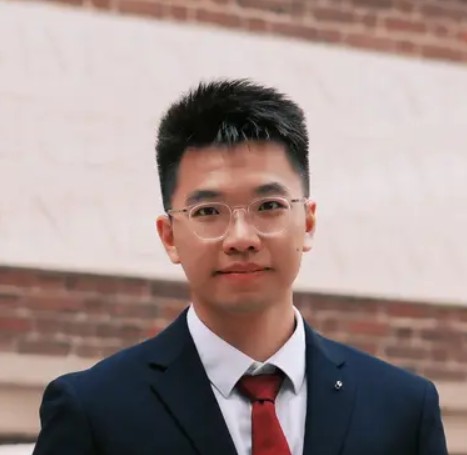
Zhenting Qi is a PhD student in computer science at Harvard.

Aounon Kumar is a postdoctoral research associate at Harvard working on trustworthy AI.

Himabindu Lakkaraju is an Assistant Professor of Business Administration at Harvard Business School and PI in D^3’s Trustworthy AI Lab. She is also a faculty affiliate in the Department of Computer Science at Harvard University, the Harvard Data Science Initiative, Center for Research on Computation and Society, and the Laboratory of Innovation Science at Harvard. Professor Lakkaraju’s research focuses on the algorithmic, practical, and ethical implications of deploying AI models in domains involving high-stakes decisions such as healthcare, business, and policy.