
The Data Science & AI Operations Lab studies how organizations can effectively integrate artificial intelligence (AI) into their operations for improved decision-making and automation. Our research explores the ways in which businesses can utilize AI-driven technologies to achieve measurable outcomes, with a focus on the development process, rigorous impact assessments through experimentation, and building the trust necessary for successful adoption. We operate on the principle that AI and data science are poised to become the foundational core of modern enterprises. To facilitate this transition, our work examines how companies must rethink and redesign their operating model to enable scalable development and deployment of AI. Our research aims to provide insights that bridge the gap between advanced AI technologies and their practical, real-world applications.
A unique aspect of the lab is it fosters collaborations between management scholars, statisticians, and computer scientists to overcome the methodological challenges that arise in the operationalization of AI due to the misalignment between statistical theory underpinning modern data science that was developed for significantly different contexts and applications than current business use cases. For example, the fundamentals of experimental design were first introduced a hundred years ago for agricultural settings with few experimental units and outcomes; today, companies run hundreds of experiments on millions of connected people, tracking thousands of outcomes.
Given the applied nature of the lab’s agenda, we often closely collaborate with industry partners. If you are interested in learning more about potential research collaborations, please reach out.
People
The Data Science and AI Operations Lab is led by:
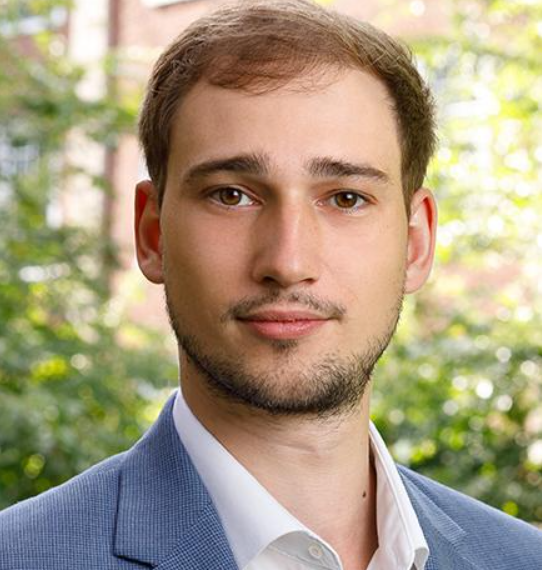
Iavor Bojinov
Assistant Professor of Business Administration,
Harvard Business School
Iavor Bojinov is an Assistant Professor of Business Administration and the Richard Hodgson Fellow at Harvard Business School. He is the co-PI of the Data Science and AI Operations Lab and a faculty affiliate in the Department of Statistics at Harvard University and the Harvard Data Science Initiative.
Professor Bojinov’s research focuses on developing novel statistical methodologies to make business experimentation more rigorous, safer, and efficient, specifically homing in on the application of experimentation to the operationalization of artificial intelligence (AI), the process by which AI products are developed and integrated into real-world applications.
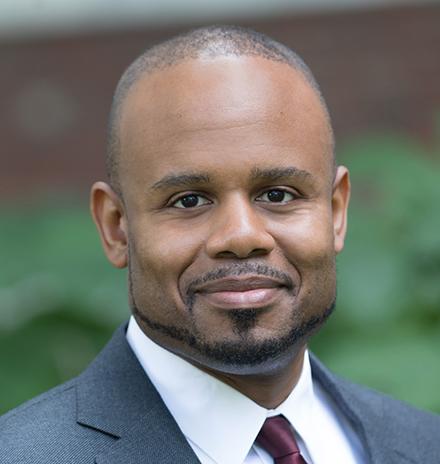
Edward McFowland III
Assistant Professor of Business Administration,
Harvard Business School
Edward McFowland III is an Assistant Professor in the Technology and Operations Management Unit at Harvard Business School. He is the co-PI of the Data Science and AI Operations Lab and teaches the first-year TOM course in the required curriculum. Professor McFowland’s research interests lie at the intersection of Anomalous Pattern Detection, AI, and the Social Sciences (e.g., management, economics, public policy). This includes the development of computationally efficient algorithms for large-scale and robust AI systems, and evaluating the impact of their deployment on managerial decision-making.
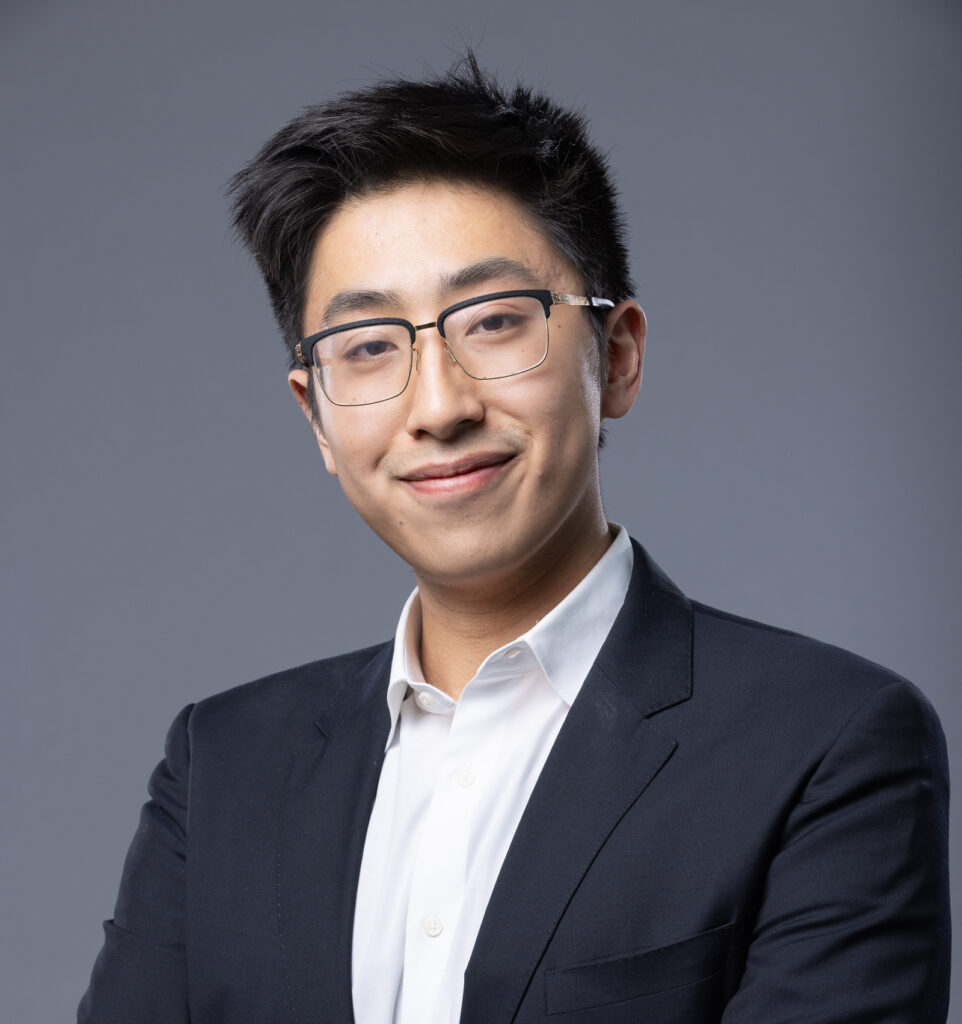
Michael Lingzhi Li
Assistant Professor of Business Administration,
Harvard Business School
Michael Lingzhi Li is an Assistant Professor in the Technology and Operations Management unit at HBS. He teaches the first-year TOM course in the required curriculum. Professor Li’s research focuses on the end-to-end development of decision algorithms based on machine learning, causal inference and operations research. He examines the implementation of such algorithms in hospitals, pharmaceutical companies, and public health organizations, and their potential to fundamentally transform healthcare operations.
Publications:
1. Experimental Evaluation of Individualized Treatment Rules
2. Forecasting COVID-19 and Analyzing the Effect of Government Interventions
The following faculty, doctoral, and staff students are active researchers in the Data Science and AI Operations Lab:

Jafer Hasnain
Research Associate,
Harvard Business School
Jafer is a Research Associate under Professor Edward McFowland III.
He is interested in leveraging new approaches in mathematical statistics to develop robust algorithms suitable for real-world data
Shaolong “Lorry” Wu
Doctoral Student,
Harvard Business School
Lorry is a PhD student at HBS. He obtained a M.S.E. in Electrical Engineering from Penn Engineering and a B.S. in Economics from the Wharton School of University of Pennsylvania. Lorry had a stint at Bridgewater before his PhD. He is broadly interested in innovation and entrepreneurship and the impact of digital technologies in business.
Publication:
Are ESG Improvements Recognized? Perspectives from the Public Sentiments, Shaolong Wu, The Journal of Impact and ESG Investing, Forthcoming

Shirley Huang
Doctoral Student,
Harvard Business School
Shirley is a doctoral student in the Technology and Operations Management Unit at HBS. Shirley is interested in human-AI collaboration and designing algorithms to more effectively support human decision-making.

Paul Hamilton
Doctoral Student,
Harvard Business School
Paul is a doctoral student in the Technology and Operations Management Unit at HBS. Paul is interested in two topics: (i) the dynamics of skills and labor markets for software engineers and IT workers, and (ii) the tradeoffs between fairness, privacy, and transparency in AI systems.
Publication:
Nailing Prediction: Experimental Evidence on Tools and Skills in Predictive Model Development
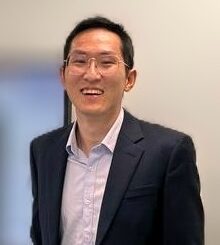
Tu Ni
Postdoc Research Fellow,
Harvard Business School
Tu is a Postdoc Research Fellow at D^3. His research is on the design and analysis of experimentation in operations, making it effective and efficient. This is mainly related to the evaluation of data science and AI solutions in companies.
Publication:
Design of Panel Experiments with Spatial and Temporal Interference

Ruru Hoong
Doctoral Student,
Harvard Business School
Ruru Hoong is a doctoral student in the Business Economics programme at HBS/Harvard Economics. Her current research agenda concerns the economic impacts of AI – in addition to several strands on data privacy and problems surrounding social media use. Investigating the efficient design and use of AI in human collaboration underlies much of her PhD research – including designing optimal human-AI decision-making systems in loan approvals and hiring, and exploring the impact of labour and technological shocks on organisational management in the AI data annotation industry.
Publication:
Self control and smartphone use: An experimental study of soft commitment devices
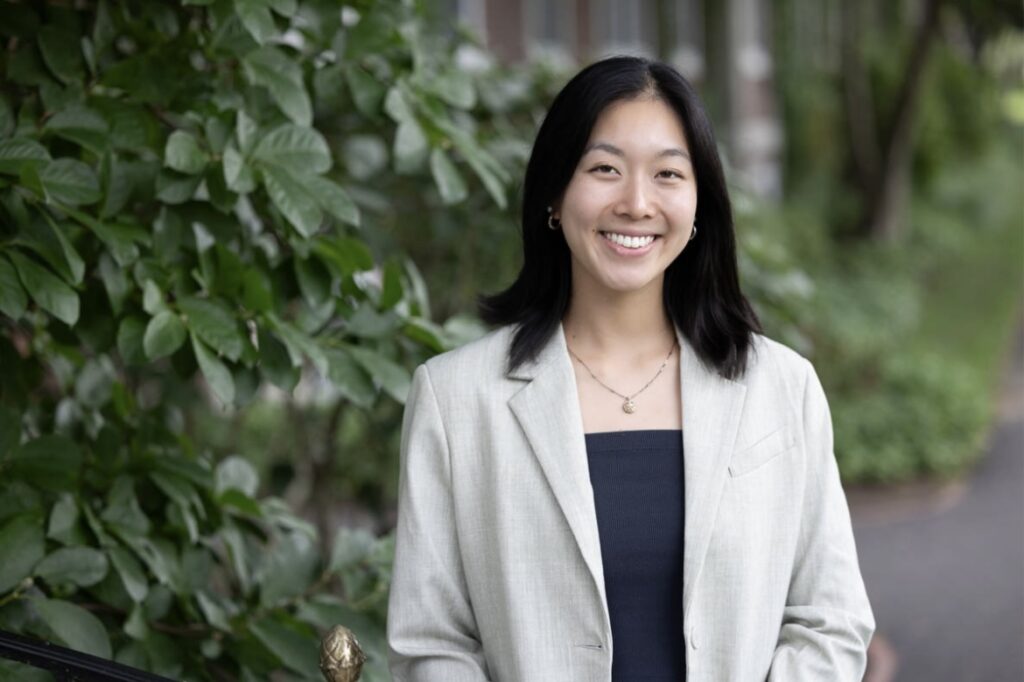
Jenny Wang
Doctoral Student,
Harvard Business School
Jenny is a doctoral student in the Technology and Operations Management Unit at HBS. Jenny is broadly interested in interpretable and explainable machine learning (ML), identity and inequality, and improving existing methods used to answer social and policy-relevant questions, and consequently, business will be affected as a result of social/policy outcomes. More specifically, Jenny’s recent research explores how LLMs are reshaping human interactions with technology, and how trust in these systems can lead to better/more efficient learning outcomes (e.g. improve news consumption).

Biyonka Liang
Doctoral Candidate,
Harvard Department of Statistics
Biyonka is a doctoral candidate in the Department of Statistics at Harvard University. Biyonka’s research focuses on developing statistical methods for complex experiments, with a particular focus on adaptively collected data, large-scale online experiments, and health applications.
Publications:
1. Context in Public Health for Underserved Communities: A Bayesian Approach to Online Restless Bandits
2. An Experimental Design for Anytime-Valid Causal Inference on Multi-Armed Bandits
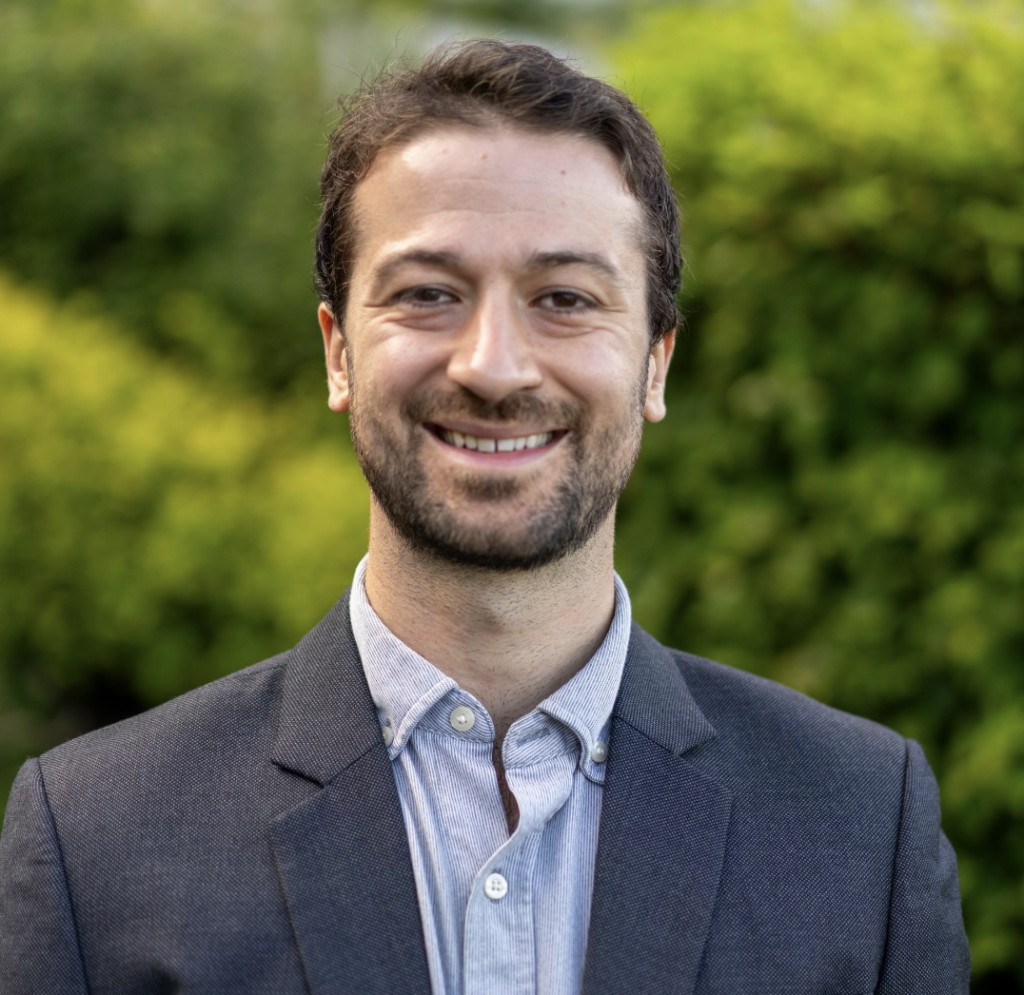
Matt DiSorbo
Doctoral Student,
Harvard Business School
Matt is a doctoral student in the TOM Unit at HBS.Matt’s research focuses on Human-AI Collaboration.
Publication:
Warnings and Endorsements: Improving Human-AI Collaboration Under Covariate Shift

Luca Vendraminelli
Postdoctoral Researcher,
Stanford University
Luca is a postdoctoral Researcher at the Digital Economy Lab at Stanford. I study the dynamics of AI diffusion in organizations to understand why some AI projects fail to improve employee performance and well-being.
Publications:
1. Innovation and Design in the Age of Artificial Intelligence
2. Why providing humans with interpretable algorithms may, counterintuitively, lead to lower decision-making performance

Annika Hildebrandt
Research Associate,
Harvard Business School
Annika is a research associate working with Professor Bojinov and Professor McFowland. Annika is interested in human-AI collaboration and how AI adoption affects individuals, teams, and organizations, particularly in the software engineering context.
Research Focus
- Applications of AI and its development
- Don’t Expect Juniors to Teach Senior Professionals to Use Generative AI: Emerging Technology Risks and Novice AI Risk Mitigation Tactics.
- Navigating the Jagged Technological Frontier: Field Experimental Evidence of the Effects of AI on Knowledge Worker Productivity and Quality.
- Nailing Prediction: Experimental Evidence on Tools and Skills in Predictive Model Development
- Experimentation & Causal Inference in the age of AI
- Winner Take All: Exploiting Asymmetry in Factorial Designs.
- Design-Based Inference for Multi-arm Bandits.
- Design of Panel Experiments with Spatial and Temporal Interference.
- Balancing Risk and Reward: A Batched-Bandit Strategy for Automated Phased Release
- Design-Based Confidence Sequences: A General Approach to Risk Mitigation in Online Experimentation
- An Experimental Design for Anytime-Valid Causal Inference on Multi-Armed Bandits.
Educational and Practitioner Materials
- Humans vs. Machines: Untangling the Tasks AI Can (and Can’t) Handle
- Is AI Coming for Your Job?
- Causal Inference for Everyone
- Pernod Ricard: Uncorking Digital Transformation. (Case)
- Orchadio’s First Two Split Experiments. (Case)
- Experimentation at Yelp. (Case)
- Experimentation at Yelp. (Teaching Note)
- Data Science at the Warriors. (Teaching Note)