Introduction
As a visionary CEO with a track record of growing businesses and championing diversity, here’s the latest research from Harvard to help you harness the power of AI, fostering continuous innovation and strengthening partnerships in your ventures.
Insights

The Harvard USPTO Patent Dataset: A Large-Scale, Well-Structured, and Multi-Purpose Corpus of Patent Applications
By: Mirac Suzgun, Luke Melas-Kyriazi, Suproteem K. Sarkar, Scott Duke Kominers, and Stuart Shieber
Leverage HUPD for Patent Analysis
The Harvard USPTO Patent Dataset (HUPD) is a rich resource that can be used to analyze patentability at the time of filing. With its 34 structured data fields per patent, it can provide valuable insights into patent decisions, classification codes, examiner information, and more. This could be particularly useful for Claure Group in identifying patent trends and making strategic decisions.
Utilize NLP for Patent Classification
The article demonstrates that Natural Language Processing (NLP) can predict patent decisions with an accuracy of up to 64%. This could be a valuable tool for Claure Group, potentially allowing you to predict the likelihood of patent acceptance and adjust your strategies accordingly.

Absenteeism, Productivity, and Relational Contracts Inside the Firm
By: Achyuta Adhvaryu, Jean-François Gauthier, Anant Nyshadham, and Jorge Tamayo
Invest in Relationship Building
The article highlights the importance of fostering relationships between managers. Currently, managers have strong lending/borrowing relationships with only 2-3 other managers out of around 20 potential partners. By investing in team-building activities or creating a platform for better communication, you could increase the number of partnerships, leading to an estimated productivity gain of 0.5%. This could result in an estimated profit increase of $300,000-$550,000.
Centralize Worker Redistribution
The study suggests that optimal centralized redistribution of workers could significantly increase productivity. Currently, managers informally “borrow” workers from other lines in response to absenteeism shocks. Implementing a centralized system for worker redistribution could streamline this process and maximize efficiency.

The Crowdless Future? How Generative AI is Shaping the Future of Human Crowdsourcing
By: Léonard Boussioux, Jacqueline N. Lane, Miaomiao Zhang, Vladimir Jacimovic, and Karim R. Lakhani
Leverage AI for Business Solutions
The research shows that AI can generate diverse, high-quality solutions quickly and cheaply. With 730 AI solutions generated in under 2 hours at a cost of $0.037 per solution, AI can be a cost-effective tool for generating business ideas in the circular economy. As the CEO of Claure Group, you might want to consider integrating AI into your business model to generate innovative solutions.
Combine Human and AI Strengths
While AI solutions were rated higher on value, human solutions were rated higher on novelty. This suggests that a combination of human and AI crowdsourcing could yield the most effective results. Consider implementing a strategy that utilizes both human creativity and AI efficiency to generate high-value, novel business solutions.

The Impact of AI on Developer Productivity: Evidence from GitHub Copilot
By: Sida Peng, Eirini Kalliamvakou, Peter Cihon, and Mert Demirer
Invest in AI Tools
The article presents a controlled experiment showing that developers using GitHub Copilot, an AI pair programmer, completed tasks 55.8% faster than those who didn’t. This significant increase in productivity suggests that investing in AI tools can greatly enhance the efficiency of your software development team.
Target Less Experienced Developers
The study found that less experienced developers, older developers, and those who program more hours per day benefited the most from AI pair programmers. This suggests that targeting these groups with AI tools like GitHub Copilot could be a strategic move to boost productivity and support career transitions into software development.

LLM’s as Simulated Economic Agents: What Can We Learn from Homo Silicus?
By: John J. Horton
Leverage LLMs for Market Research
Given that large language models (LLMs) like GPT-3 can simulate human behavior, they could be used as a cost-effective tool for market research and consumer behavior analysis. This could help Claure Group to understand customer preferences and make informed business decisions without the need for costly real-world experiments.
Utilize LLMs for HR Strategy
The article mentions that in a simulated hiring scenario, the imposition of a minimum wage causes GPT-3 employers to shift towards more experienced workers. This insight could be used to refine your HR strategy, particularly when considering wage policies and hiring practices.

Circular Products and Business Models: Opportunities for Entrepreneurs, Managers, and Investors
By: Shirley Lu and George Serafeim
Embrace the Circular Economy
The transition to a circular economy represents a multi-trillion-dollar market opportunity. In Europe alone, this transition represents a €230 billion investment opportunity with a €1.5 trillion value creation potential until 2040. As the CEO of Claure Group, you should consider investing in circular business models and products, which could potentially yield significant returns.
Prioritize Product Utilization and Material Efficiency
Increasing product utilization and material efficiency are key ways to achieve a more circular economy. For instance, when Marcelo Claure was CEO of Sprint, he pioneered the takeback program for used iPhones, which opened the Apple ecosystem to new customers in lower-income markets, while enabling existing customers to purchase newer models. This approach not only extended the product’s lifecycle but also unlocked new revenue streams and improved customer loyalty. Similarly, material efficiency can be achieved through digital technologies and artificial intelligence, as demonstrated by SXD Zero Waste, which uses these technologies to reduce pre-consumer waste from offcuts during apparel production by up to 55%.

Tech For All Explores Innovation in Women’s Health
By: Rem Koning and Noa Ben Haim
Invest in Women’s Health Innovation
The article highlights the significant gaps in women’s health innovation due to societal taboos and lack of representation among inventors. As the CEO of Claure Group, consider investing in startups or initiatives that focus on women’s health. This could not only fill a significant market gap but also contribute to social good.
Promote Diversity in Innovation
The article points out that children from families in the top 1% of the income distribution are 10 times as likely to have filed for a patent as those from below-median-income families. This suggests that there’s a vast untapped potential for innovation among diverse socioeconomic backgrounds. As a leader, you could advocate for and implement policies that promote diversity in innovation, potentially leading to a broader range of products and services.

Mapping Organizational-Level Networks Using Individual-Level Connections: Evidence from Online Professional Networks
By: Shelley Li, Frank Nagle, and Aner Zhou
Leverage Employee Networks
The article suggests that a firm’s network centrality, especially among non-executive employees, positively predicts value. As the CEO of Claure Group, you may want to consider strategies to enhance the interconnectedness of your employees across all levels. This could potentially lead to higher firm value, as evidenced by the 1.4% increase in Tobin’s Q for firms moving up one decile in eigenvector centrality.
Invest in R&D
The article also highlights a positive relationship between a firm’s centrality and its R&D spending. Firms with higher R&D expenses gain more value from centrality. As such, it may be beneficial for Claure Group to increase investment in R&D, as it could lead to more patented innovations that are scientifically and economically impactful.

HBR: How AI Will Accelerate the Circular Economy
By: Shirley Lu and George Serafeim
Embrace the Circular Economy
The article emphasizes the importance of transitioning to a circular economy, which could unlock trillions of dollars in value creation. As the CEO of Claure Group, consider exploring business models that recover or recycle resources used in your value chain. This could involve extending the life of products, increasing material efficiency, and using more recycled materials.
Leverage AI and Digital Tools
The article outlines how AI and digital tools can help overcome barriers to a circular economy, such as the low residual value of used products and lack of traceability. Consider investing in these technologies to improve your company’s sustainability and efficiency. For instance, AI can be used to redesign products to generate less waste, while digital tools can enhance traceability in your supply chain.
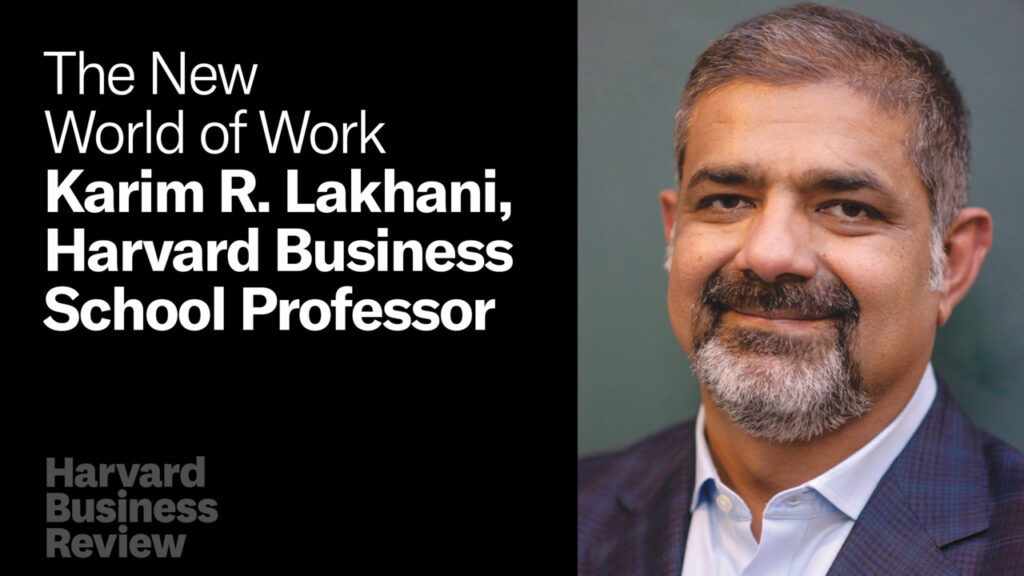
HBR: AI Won’t Replace Humans – But Humans With AI Will Replace Humans Without AI
By: Karim R. Lakhani
Embrace AI
The article emphasizes the importance of integrating AI into business operations. Harvard Business School professor Karim Lakhani predicts that AI will lower the cost of cognition, similar to how the internet lowered the cost of information transmission. This suggests that businesses not adopting AI will be at a significant disadvantage. As the CEO of Claure Group, it would be beneficial to explore how AI can be integrated into your business model to enhance efficiency and competitiveness.
Invest in Continuous Learning and Change Management
The article highlights the need for executives and employees to develop a digital mindset and adapt to new technologies. Lakhani stresses that learning and change management should be seen as critical skills in the DNA of any successful organization. As a leader, investing in continuous learning programs for your team and fostering a culture that embraces change could be key to staying ahead in the digital age.
In Summary
Harnessing AI’s power can revolutionize efficiency and competitiveness in your business, a priority for the Claure Group. Fostering a culture of continuous learning and change management can help your team adapt and thrive amidst technological advancements. These are key components to consider given your ambition for business growth, innovation and fostering diversity.