

How can technology be harnessed to create more equity, inclusivity, and empowerment in historically marginalized spaces? Recently Dr. James W. Riley, principal investigator of the blackbox Lab at the Digital Data Design (D^3) Institute at Harvard Business School, in collaboration with the Berkman Klein Center for Internet and Society at Harvard Law School, Professor Aymar Jean Escoffery of Northwestern, and Falona Joy of Joy Media, held a special session Ethical Tech Showcase: Advancing Public Interest Technology in Arts & Culture to show how technology can serve not just as a tool for access, but as a catalyst for cultural support and social justice in the digital age. The event featured a series of lightning demos, a panel moderated by Lewis Long, Director and Founder of Long Gallery Harlem, and a lunch conversation focusing on how to support the Public Interest Technology (PIT) ecosystem.
Key Insight: Rooting Digital Solidarity in Humanity
“We must root ourselves in human ways of being as AI expands our capacities.” [1]
Aymar Jean “AJ” Escoffery
In his talk, Dr. Escoffery argued for integrating ancestral intelligence and culture into our technological frameworks, positing that the challenges posed by social media and AI are fundamentally cultural rather than purely technological. By drawing on collectively cultivated knowledge and locally specific practices, he suggested we can create more ethical and inclusive digital ecosystems. Escoffery used the metaphor of a cookout to illustrate how decentralized platforms could be built around shared values such as reciprocity, abundance, and liberation. This approach emphasizes intentional community-building and meaningful inclusion, aiming to cultivate sustainable and equitable connections in our digital spaces.
Key Insight: Transforming Museum Engagement
“Museums have the ability to expand our worlds.” [2]
Falona Joy
Falona Joy shared her perspective that museums possess a unique power to broaden our perspectives and ignite curiosity. Joy and Craig Stevens introduced GRIOT and Afro-Atlantica, innovative platforms that leverage immersive technologies to revolutionize museum experiences. By integrating photogrammetry, artificial intelligence, and extended reality (XR), this technology transforms static artifacts into interactive, digital experiences, allowing users to engage with cultural objects in unprecedented ways. Afro-Atlantica aims to unite African collections globally, offering new avenues for storytelling, cultural preservation, and community engagement. By incorporating AI, virtual reality, and digital technology, this approach not only enhances museum accessibility, but reimagines how we preserve, interact with, and understand cultural heritage in the digital age.
Key Insight: Community-Powered Television
“We’re really interested in decentralizing who owns content.” [3]
Elijah McKinnon
Elijah McKinnon, co-founder and executive director of Open Television (OTV), is pioneering a transformative approach to media production and distribution. Their vision challenges the traditional entertainment industry’s reliance on vanity metrics and instead highlights the untapped potential of millions of viewers interested in independent and auteur-level content. By exploring the possibilities that different levels of subscription funding would enable, McKinnon explained how OTV could address the demand for diverse intersectional representation, and establish a paradigm where audiences actively participate in shaping the content they consume.
Key Insight: AI that Centers Black Voices and Experiences
“We should do community-involved development in the design life cycle at all times.” [4]
Erin Reddick
Recognizing the pervasive racial bias in mainstream AI systems, Erin Reddick founded ChatBlackGPT, a platform designed to provide accurate, culturally relevant information about Black history and culture. By crowdsourcing research questions, collaborating with historians, and explaining complex AI concepts using relatable metaphors, she is not only creating a more inclusive AI tool but also fostering greater understanding and engagement within the Black community. This approach aims to provide a “soft landing” for underrepresented groups in the rapidly evolving AI landscape, offering psychological safety and equal access to information. Reddick’s work exemplifies a new paradigm in tech development, one that prioritizes transparency, community input, and the democratization of knowledge for transformational change.
Key Insight: Community First
“It’s about communities and people, not platforms and protocols.” [5]
Rudy Fraser
Rudy Fraser, founder of BlackSky, is pioneering a new approach to social media that prioritizes community needs over traditional platform-centric models. BlackSky, with over 360,000 monthly active users, features user-owned data, community-driven moderation, and open-source development. The platform’s design philosophy incorporates familiar interfaces to ease user adoption while introducing advanced features like custom feeds and user-controlled content curation. Envisioning the community benefits even beyond BlackSky, Fraser’s approach aims to create a sustainable ecosystem where the community can thrive independently of any single company or platform.
Key Insight: Building Civic Engagement Online
“Each community actually gets to determine what their own rules and norms are.” [6]
Jeremy Knight
New_ Public, a nonprofit research and development lab, is pioneering a revolutionary approach to digital spaces that prioritizes community well-being and civic engagement. Their work centers on 14 specific indicators of a healthy digital environment, and “community stewards,” who act as facilitators in online spaces. Jeremy Knight, head of external engagement at New_ Public, explained how they are developing prototypes for pro-social networks that encourage meaningful discourse and two-way conversations between community members and local journalists. Their innovative platform allows each community to establish its own rules and norms, fostering a sense of ownership and tailored engagement. Starting with pilot programs in small communities across the United States, New_ Public aims to create safe, welcoming digital spaces that facilitate the sharing of local news, events, and emergency updates. This model, co-built with community stewards and supported by local foundations and businesses, represents a significant shift towards more responsive and community-centric digital ecosystems.
Why This Matters
Forward-looking business leaders should recognize that ethical innovation and alignment with community-informed values is a driver of competitive advantage. This might mean rethinking traditional metrics of success and considering how platforms or products can foster genuine community engagement and inclusivity. Moreover, culturally-informed AI approaches highlight untapped market opportunities. By embracing these community-first, ethically-driven technological approaches, businesses can enhance their social impact and unlock new avenues for innovation, customer engagement, and sustainable growth in an increasingly diverse and socially conscious marketplace.
References
[1] Aymar Jean Escoffery, “Dr. Aymar Jean Escoffery on Ancestral Intelligence,” posted June 6, 2025, by blackbox lab, YouTube, 1:45, https://youtu.be/JjnfzNufKw8?si=iU-lpxFAhnF68g0h.
[2] Falona Joy and Craig Stevens, “Falona Joy and Craig Stevens of Joy Media,” posted June 6, 2025, by blackbox lab, YouTube, 5:36, https://youtu.be/jJFQ3wwqPic?si=H3ED5hh1GtBCyi08.
[3] Elijah McKinnon, “Elijah McKinnon of OTV | Open Television,” posted June 6, 2025, by blackbox lab, YouTube, 3:47, https://youtu.be/XVllyW5RkoE?si=7oeK6DE68Wvskm_h.
[4] Erin Reddick, “Erin Reddick of ChatBlackGPT,” posted June 6, 2025, by blackbox lab, YouTube, 3:01, https://youtu.be/cHZx3W0cX-Y?si=y0g5ySR5NW5oNW0f.
[5] Rudy Fraser, “Rudy Fraser of BlackSky,” posted June 6, 2025, by blackbox lab, YouTube, 3:50, https://youtu.be/Y6KJRxrOkhM?si=VRjJXlCwLBRXnOXm.
[6] Jeremy Knight, “Jeremy Knight of New_ Public,” posted June 6, 2025, by blackbox lab, YouTube, 3:06, https://youtu.be/NpQnAaodI7k?si=cBJShD2PEFAOhOOV.
About the Speakers
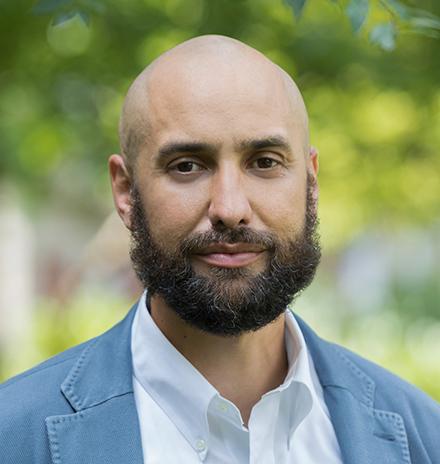
James Riley is an Assistant Professor of Business Administration at Harvard Business School and the Principal Investigator of D^3’s blackbox Lab. He is an economic sociologist with an MS in Urbanization and Development from the London School of Economics, and a PhD from the MIT Sloan School of Management.

Aymar Jean “AJ” Escoffery is Margaret Walker Professor of Communication Studies at Northwestern University, 2024-25 Visiting Scholar at Harvard University’s Berkman Klein Center, and director of the Media and Data Equity (MADE) Lab.
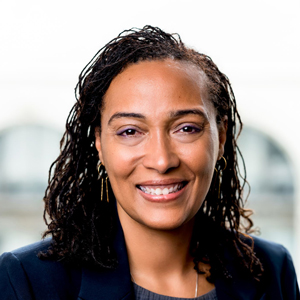
Falona Joy is CEO of Joy Media, and President and CEO of SNP Strategies Inc., a consulting practice designed to build the vitality of nonprofit institutions, support philanthropy to deepen and measure impact, and increase the ability of social sector leaders to achieve their missions and visions.
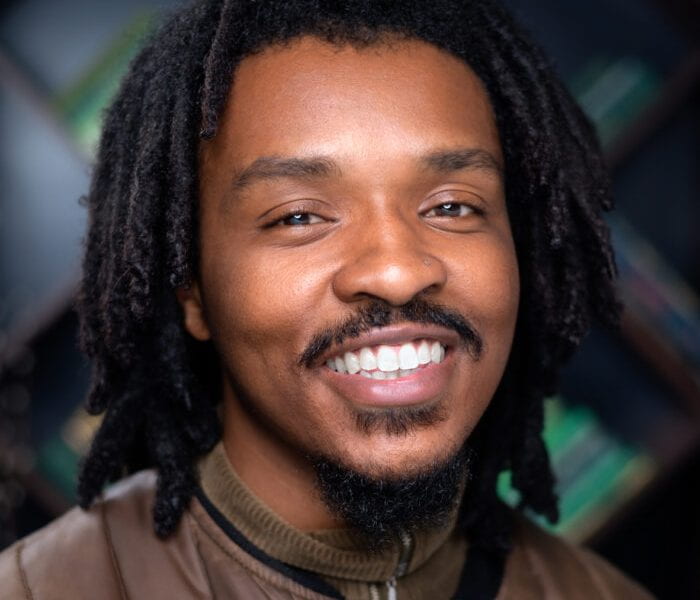
Craig Stevens is a futurist archeologist and curator. He is XR Curator, Afro-Atlantica of Joy Media, and is completing his phD in the Anthropology Department at Northwestern University.
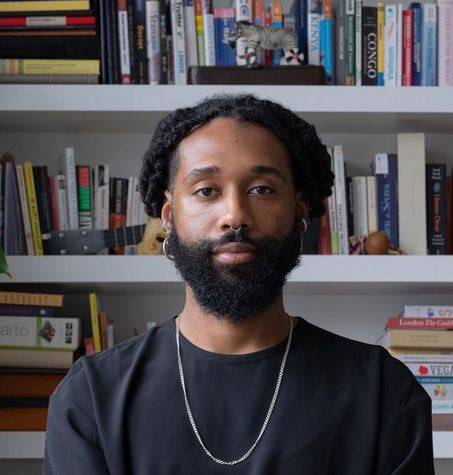
Elijah McKinnon is Co-Founder and Executive Director of Open Television (OTV), a non-profit streaming platform and media incubator for intersectional storytelling.
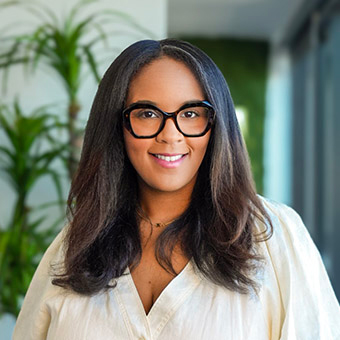
Erin Reddick is CEO and Founder of ChatBlackGPT,a platform aiming to offer a safe, inclusive space for exploring AI, specifically tailored to the Black American experience.

Rudy Fraser is a technologist, community organizer, co-founder of Blacksky Algorithms, and Fellow at the Applied Social Media Lab at Harvard’s Berkman Klein Center for Internet & Society.
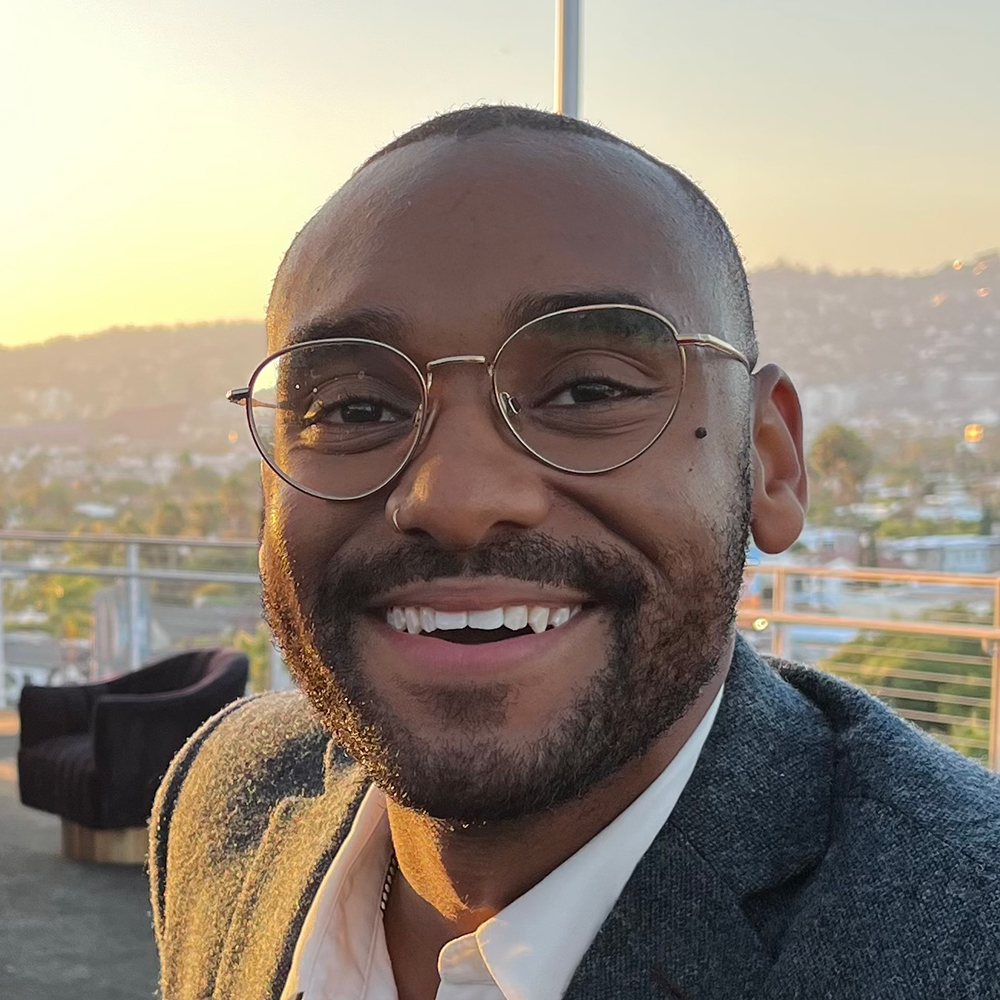
Jeremy Knight is a cultural strategist, futurist, and Head of External Engagement at New_ Public.