Introduction
Discover Harvard’s latest research insights aligned with your client-centric vision, long-term strategy focus, and your belief in leveraging technology, including dynamic findings on how open source contributions can dramatically amplify productivity, enhance corporate image, and aid in recruiting top tech talent.
Insights

Navigating the Jagged Technological Frontier: Field Experimental Evidence of the Effects of AI on Knowledge Worker Productivity and Quality
By: Fabrizio Dell’Acqua, Saran Rajendran, Edward McFowland III, Lisa Krayer, Ethan Mollick, François Candelon, Hila Lifshitz-Assaf, Karim R. Lakhani, Katherine C. Kellogg
Embrace AI for productivity and performance
The paper shows that consultants using AI, specifically the GPT-4 language model, were significantly more productive, completing 12.2% more tasks and 25.1% faster. The quality of work also improved by over 40%. As the CEO of Asset & Wealth Management at JPMorgan Chase, consider implementing AI tools like GPT-4 to enhance productivity and quality of work in your team.
Understand AI’s limitations and strengths
The paper also highlights that tasks outside AI’s capabilities resulted in a 19% drop in correct solutions. It’s crucial to understand the “jagged frontier” of AI capabilities and strategically delegate tasks based on this. The two collaboration strategies between humans and AI – Centaurs and Cyborgs – could be a useful framework for your team to adopt.
Invest in AI training
The study showed that both lower and higher performing consultants benefited from using AI, with scores increasing by 43% and 17% respectively. However, to fully leverage AI’s potential, it’s important to provide your team with training on effective AI usage. This could be a worthwhile investment for JPMorgan Chase’s Asset & Wealth Management division.

The Crowdless Future? How Generative AI is Shaping the Future of Human Crowdsourcing
By: Léonard Boussioux, Jacqueline N. Lane, Miaomiao Zhang, Vladimir Jacimovic, and Karim R. Lakhani
Leverage AI for solution generation
The research shows that AI, specifically GPT-4, can generate business solutions of comparable quality to those created by humans. With 730 AI solutions generated in under 2 hours at a cost of $0.037 per solution, this could be a cost-effective and efficient method for generating innovative business solutions in the asset and wealth management sector.
Combine human and AI capabilities
While AI solutions were rated higher on environmental and financial value, human solutions were rated higher on novelty. This suggests a potential strategy of combining human creativity and AI efficiency for optimal crowdsourcing. This could be particularly beneficial in areas such as product development or strategy formulation, where both novelty and value are key.

The Impact of AI on Developer Productivity: Evidence from GitHub Copilot
By: Sida Peng, Eirini Kalliamvakou, Peter Cihon, and Mert Demirer
Implement AI Tools
The article presents compelling evidence that AI tools significantly increase productivity in software development. In a controlled experiment, developers using GitHub Copilot, an AI pair programmer, completed tasks 55.8% faster than those without it. As JPMorgan Chase continues to develop its digital infrastructure, implementing similar AI tools could significantly enhance developer productivity.
Focus on Skill Development
The study found that less experienced programmers benefited more from AI tools like GitHub Copilot. This suggests that AI tools can be instrumental in skill development initiatives, helping employees transition into software development roles more smoothly. This could be a strategic focus for JPMorgan Chase, particularly in expanding and enhancing its tech workforce.

Using GPT for Market Research
By: James Brand, Ayelet Israeli, Donald Ngwe
Implement GPT-3 for Market Research
The paper demonstrates that GPT-3 can be a valuable tool for understanding consumer preferences. It exhibits patterns consistent with economic theory and consumer behavior, and its responses to survey questions yield realistic willingness-to-pay estimates. This could be a game-changer for your Asset & Wealth Management division, providing you with a fast, low-cost method of conducting market research.
Develop Customer Personas
GPT-3 can be used to create realistic customer “personas” by providing additional contextual information. This could be a powerful tool for your team to better understand and cater to the needs of your clients. However, it’s important to validate findings before relying solely on GPT-3, as it can occasionally provide incorrect responses and is sensitive to prompt wording and structure.

Detecting Routines: Applications to Ridesharing CRM
By: Ryan Dew, Eva Ascarza, Oded Netzer, Nachum Sicherman
Leverage the Bayesian nonparametric model
The article introduces a new statistical model that can help in understanding individual-level routines. This model can be used to predict future usage and customer retention more accurately. For JPMorgan Chase, this could mean better forecasting of customer behavior in terms of investments, transactions, and product usage.
Implement routine-based customer segmentation
The article suggests that understanding customer routines can significantly impact customer value. By identifying routine types, you can tailor your services and marketing strategies to specific segments, potentially increasing customer retention and lifetime value. For example, customers with a ‘commuting’ routine might be more interested in regular investment plans, while ‘weekend’ routine customers might be more inclined towards one-time investment opportunities.

Mapping Organizational-Level Networks Using Individual-Level Connections: Evidence from Online Professional Networks
By: Shelley Li, Frank Nagle, Aner Zhou
Leverage Employee Networks
The article suggests that a firm’s value and innovation are positively influenced by its centrality in the overall employee network. This is primarily driven by middle- and low-level employees. As the CEO of Asset & Wealth Management at JPMorgan Chase, consider strategies to foster and leverage these networks within your organization. This could enhance information flows, aid creativity, problem-solving, and innovation.
Focus on All Levels
The research highlights the importance of networks of employees at all levels, not just top executives. This suggests that incorporating the previously “invisible” networks of rank-and-file employees allows more granular analysis of how connectivity impacts productivity, innovation, and value creation. It might be beneficial to invest in tools or initiatives that encourage cross-level and cross-departmental networking and collaboration.

HBR: How the Best Chief Data Officers Create Value
By: Suraj Srinivasan and Robin Seibert
Invest in a Chief Data Officer (CDO)
The article emphasizes the importance of a CDO in leveraging data and analytics to create business value. As the CEO of Asset & Wealth Management at JPMorgan Chase, consider the potential benefits of having a dedicated executive to manage data architecture, governance, and the development of data products and platforms.
Prioritize Data Literacy
The article suggests that successful CDOs focus on upskilling employees and developing organization-wide competencies in data. This could be a valuable strategy for JPMorgan Chase, as it would enable more efficient use of data across all departments and levels of the organization.
Implement Value Measurement
The article highlights the importance of measuring the value contribution of data initiatives. This could involve developing both qualitative and quantitative measurements, such as the adoption rate of data products, the efficiency of data product teams, and the business impact of data products and platforms. Implementing such measures at JPMorgan Chase could help to ensure the optimal allocation of resources and the success of data initiatives.

HBR: How AI Will Accelerate the Circular Economy
By: Shirley Lu and George Serafeim
Embrace the Circular Economy
The article emphasizes the importance of transitioning to a circular economy, which could unlock trillions of dollars in value creation. As the CEO of Asset & Wealth Management at JPMorgan Chase, you could consider investing in companies that are leading the way in this transition. This includes businesses that are increasing product utilization, improving material efficiency, and using more recycled materials.
Invest in Sustainability-Focused Funds
The article mentions the emergence of multi-sector, sustainability-focused funds that bridge the gap between traditional venture capital and private equity. This could be a promising area for investment, given the increasing importance of sustainability in today’s economy.
Leverage AI for Material Efficiency
The article provides an example of a company that uses AI to redesign garment mockups, resulting in zero waste in fabric and about 55% lower cost. This demonstrates the potential of AI in improving material efficiency and reducing costs, which could be of interest to companies in your portfolio.
Explore Product-as-a-Service Models
The article discusses the potential of product-as-a-service models, where companies retain ownership of a product while consumers pay for its use. This could be a viable business model for companies in your portfolio, particularly those in industries with high product turnover.
Prioritize Investments in Recycled Materials
The article highlights the importance of using more recycled materials, which can help companies reduce carbon emissions and increase “materials security.” This could be a key consideration when evaluating potential investments.
HBR: AI Won’t Replace Humans – But Humans With AI Will Replace Humans Without AI
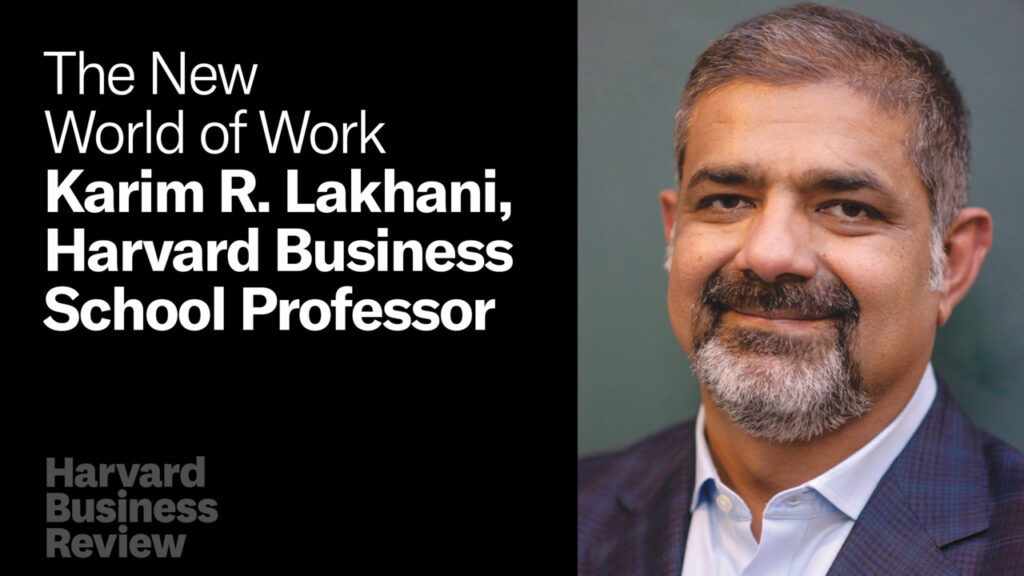
By: Karim R. Lakhani
Embrace AI and Digital Transformation
The article emphasizes the importance of adopting AI and digital technologies in core functions. It suggests that most companies will not have a choice but to adopt AI as it becomes increasingly integrated into our daily lives. The cost of transitioning to AI is decreasing, making it more accessible for businesses. However, the challenge lies in organizational change, which accounts for 70% of the transition, compared to the technological challenge, which is just 30%.
Invest in Continuous Learning and Change Management
The article highlights the importance of continuous learning and change management as critical skills in the DNA of any successful organization. Every executive and worker needs to develop a digital mindset, understanding how these technologies work and how to deploy them. The article suggests that understanding machine learning and AI is now a critical part of understanding how business works, similar to understanding accounting. Furthermore, the ability to continuously change and adapt becomes very important in this rapidly evolving digital world.

The Hidden Benefits of Giving Back to Open Source Software
By: Frank Nagle
Encourage Open Source Contributions
The research shows that companies that allow their employees to contribute to open source software on company time can boost the company’s productivity by as much as 100 percent. This is due to the experience and knowledge employees gain through contributing, which can be applied to their work, leading to increased productivity and competitive advantage.
Leverage Open Source for Recruitment and Image
In addition to productivity gains, contributing to open source software is seen as good corporate citizenship in the tech industry. This can enhance JPMorgan Chase’s image and potentially improve its ability to recruit top talent in the tech sector.
In Summary
These latest Harvard insights, underscoring the necessity of embracing AI, digital transformation, continuous learning, and change management, can perfectly align with your client-first approach at JP Morgan Chase. Adopting AI and obtaining a digital mindset could enable tailored, efficient client solutions, while fostering a culture of continuous change and learning promotes long-term vision. These forward-thinking strategies could help to ensure JP Morgan stays ahead.