Introduction
As a pioneer of “customer-driven innovation”, dive into cutting-edge business research from Harvard that aligns with your philosophy.
Insights

Navigating the Jagged Technological Frontier: Field Experimental Evidence of the Effects of AI on Knowledge Worker Productivity and Quality
By: Fabrizio Dell’Acqua, Edward McFowland III, Ethan Mollick, Hila Lifshitz-Assaf, Katherine C. Kellogg, Saran Rajendran, Lisa Krayer, François Candelon, Karim R. Lakhani
Leverage AI for productivity and quality
The study shows that AI can significantly enhance productivity and performance of highly skilled workers. Consultants using AI completed 12.2% more tasks on average and were 25.1% faster. They also produced higher quality results, scoring more than 40% higher on quality metrics. Given Intuit’s focus on innovation and efficiency, integrating AI like GPT-4 into your operations could lead to similar improvements.
Implement AI training and strategies
The study found two successful AI use strategies: “Centaurs” who strategically divided activities between themselves and AI, and “Cyborgs” who deeply intertwined their work with the AI. Training your team on these strategies could help them better leverage AI tools, leading to increased productivity and performance.

The Crowdless Future? How Generative AI is Shaping the Future of Human Crowdsourcing
By: Léonard Boussioux, Jacqueline N. Lane, Miaomiao Zhang, Vladimir Jacimovic, and Karim R. Lakhani
Leverage AI for Rapid Idea Generation
The study showed that GPT-4 was able to generate 730 solutions in under 2 hours at a cost of $0.037 per solution. This indicates that AI can be a cost-effective and efficient tool for generating business solutions, which could be particularly useful for Intuit as it continues to innovate in the financial software space.
Combine Human and AI Efforts for Balanced Innovation
The research found that while AI solutions rated higher on value, human solutions were more novel. This suggests that a combined approach could yield the best results, balancing novelty and value. As Intuit continues to develop new products and services, incorporating AI into the ideation process could enhance the overall quality of solutions.

The Impact of AI on Developer Productivity: Evidence from GitHub Copilot
By: Sida Peng, Eirini Kalliamvakou, Peter Cihon, and Mert Demirer
Invest in AI Tools
The study found that developers using GitHub Copilot, an AI pair programmer, completed tasks 55.8% faster than those who didn’t. This significant increase in productivity suggests that investing in AI tools can greatly enhance the efficiency of your software development team.
Target Less Experienced Developers
The study also found that less experienced developers, older developers, and those who program more hours per day benefited the most from the AI tool. This suggests that targeting these demographics with AI tools like GitHub Copilot could potentially lead to even greater productivity gains.

Using GPT for Market Research
By: James Brand, Ayelet Israeli, and Donald Ngwe
Leverage Large Language Models (LLMs) for Market Research
The study shows that LLMs like GPT-3 can generate realistic data on consumer preferences quickly and cheaply. This could be a game-changer for Intuit as it could supplement or even replace traditional market research methods, saving both time and resources.
Invest in Prompt Engineering
The study highlights that prompt engineering is critical but not yet systematic. Investing in this area could help Intuit optimize the use of LLMs for market research, ensuring more accurate and useful results.
Be Cautious of Potential Incorrect Responses
While LLMs show promise, the study also warns of the potential for incorrect responses. It’s important to validate findings before fully relying on these models.
Keep an Eye on Future Developments
As these models continue to improve, their usefulness for marketing and understanding consumer behavior should also increase. Staying abreast of these developments could give Intuit a competitive edge.

Detecting Routines: Applications to Ridesharing CRM
By: Ryan Dew, Eva Ascarza, Oded Netzer, Nachum Sicherman
Implement the Bayesian nonparametric model
This model can help Intuit understand individual customer routines, which can be a key driver of customer value. By identifying recurring patterns in usage, you can better predict future usage, reduce churn, and increase resilience to service failures. This could be particularly useful for Intuit’s financial and tax preparation software, where understanding customer routines can lead to more targeted and effective services.
Focus on temporal routines over location
The article found that temporal routines were more important than location routines for predicting customer value. This suggests that Intuit should focus more on when customers are using their services, rather than where. This could lead to more effective targeting and segmentation strategies, ultimately increasing customer value.

Mapping Organizational-Level Networks Using Individual-Level Connections: Evidence from Online Professional Networks
By: Shelley Li, Frank Nagle, and Aner Zhou
Invest in Employee Connectivity
The article highlights the importance of broad employee connections for firm outcomes like value and innovation. Given that Intuit operates in the Information industry, which is identified as highly interconnected, it would be beneficial to further invest in tools and platforms that enhance employee connectivity and information sharing.
Focus on Non-Executive Employees
The study found that the positive association between network centrality and firm value is driven by connections of middle and lower level employees rather than top executives. This suggests that Intuit should continue to value the input and ideas of all employees, not just those at the executive level. Encouraging innovation and information sharing at all levels could lead to higher firm value and more impactful patents.

The Benefits of Revealing Race: Evidence from Minority-owned Local Businesses
By: Abhay Aneja, Michael Luca, and Oren Reshef
Implement a Similar Feature
Given the positive impact of Yelp’s Black-owned label on business visibility and performance, Intuit could consider implementing a similar feature. This could be particularly beneficial for minority-owned businesses using your platform. The study showed a 67% increase in weekly page views and over 50% increase in orders and revenue for businesses with the label.
Cater to Consumer Preferences
The study suggests that such labels cater to consumers with specific preferences, leading to increased engagement. Intuit could leverage this insight to better cater to its users’ preferences, potentially leading to increased user engagement and satisfaction. The study found that the impacts were larger in more liberal-leaning neighborhoods, indicating that political and social views can significantly influence consumer behavior.

Perceptions Related to Engaging in Non-Driving Activities in an Automated Vehicle While Commuting: A Text Mining Approach
By: Yilun Xing, Linda Ng Boyle, Rafaella Sadun, John D. Lee, Orit Shaer, Andrew Kun
Focus on Productivity Tools
The study shows that 76% of participants would continue work tasks while commuting in an AV, with 8.7% even switching from current tasks to work tasks. As the founder of Intuit, a company that provides financial and tax preparation software, this suggests a potential market for developing or adapting your products for use in AVs.
Enhance User Interface
The study emphasizes the need to design AV interfaces to support safe and effective engagement in varied non-driving tasks. This could be an opportunity for Intuit to collaborate with AV manufacturers to integrate your software solutions in a way that is both user-friendly and conducive to the unique environment of an automated vehicle.
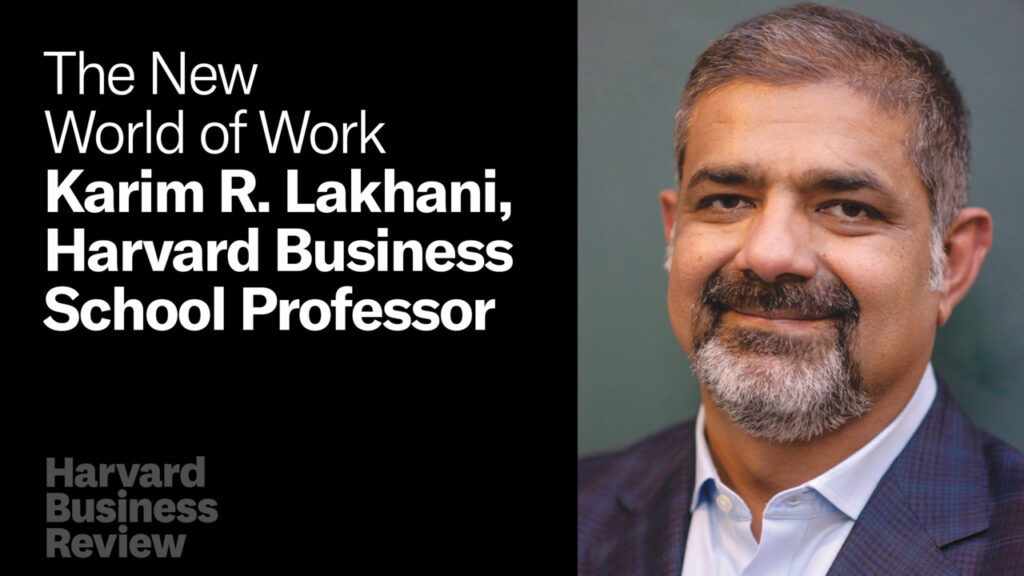
HBR: AI Won’t Replace Humans – But Humans With AI Will Replace Humans Without AI
By: Karim R. Lakhani
Embrace AI and Digital Transformation
The article emphasizes the inevitability of AI integration in businesses. It suggests that companies that do not adopt AI and digital at their core functions risk becoming obsolete. This is particularly relevant for Intuit, a company that thrives on innovation and digital solutions.
Invest in Continuous Learning and Change Management
The article suggests that 70% of the challenge in adopting AI is organizational, not technological. It highlights the importance of continuous learning and change management as critical skills for any successful organization. For Intuit, this could mean investing more in employee training and creating a culture that embraces change and innovation.

HBR: How AI Will Accelerate the Circular Economy
By: Shirley Lu and George Serafeim
Embrace the Circular Economy
As the founder of a company that provides financial management solutions, you should consider how Intuit can contribute to the circular economy. This could be through initiatives like developing software that helps businesses track and manage their resource usage, waste, and recycling efforts. The circular economy offers trillions of dollars in value creation, and AI can help overcome barriers such as the low residual value of used products and the high cost of separating and processing materials.
Invest in AI and Digital Tools
The article highlights how AI and digital tools are being used to increase product utilization, material efficiency, and the use of recycled materials. For example, AI is being used to redesign garment mockups that generate less pre-consumer waste, resulting in about 55% lower cost. Intuit could consider investing in similar technologies or partnerships to help its customers become more efficient and sustainable.
In Summary
The latest Harvard research highlights the necessity of embracing AI and digital transformation, crucial for Intuit to maintain its innovative edge. Furthermore, maintaining organizational agility through continuous learning is pivotal, underlining Intuit’s need to invest in employee training and foster a culture receptive to change. These insights endorse your championing of customer-driven innovation and “follow me home” strategy.