Introduction
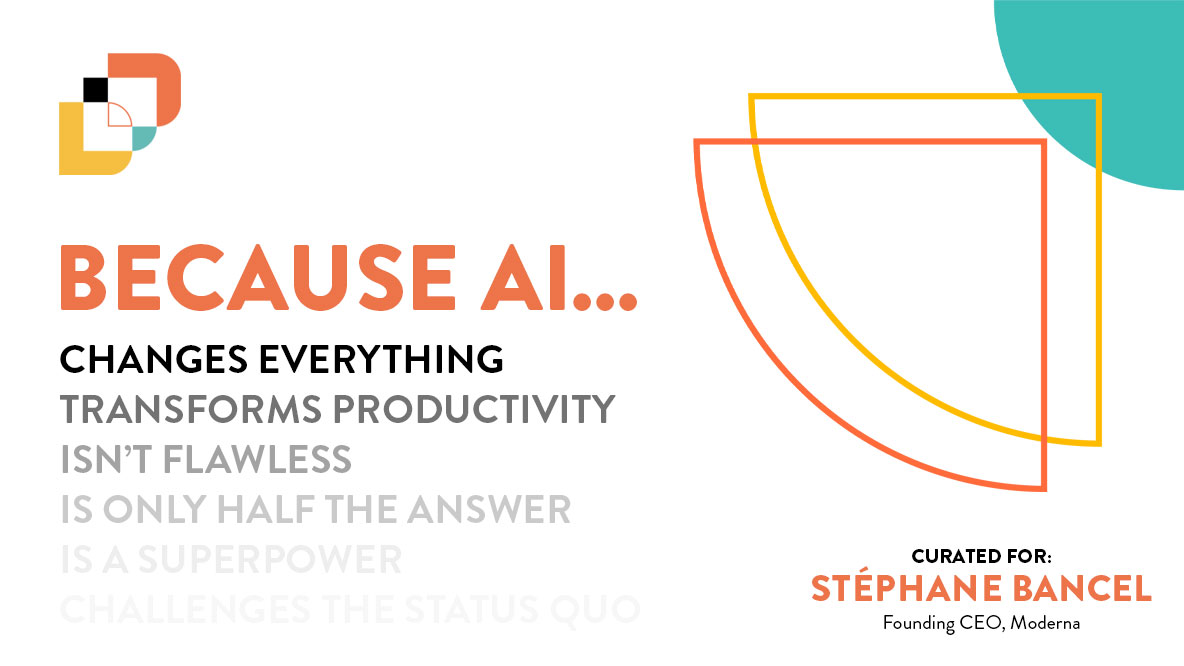
Explore the latest insights from Harvard, particularly focusing on the importance of AI adoption and continuous learning— aligning perfectly with your belief in science as a innovation driver at Moderna, coupled with long-term vision and agility.
Insights

The Harvard USPTO Patent Dataset: A Large-Scale, Well-Structured, and Multi-Purpose Corpus of Patent Applications
By: Mirac Suzgun, Luke Melas-Kyriazi, Suproteem K. Sarkar, Scott Duke Kominers, and Stuart Shieber
Leverage HUPD for Patent Analysis
The Harvard USPTO Patent Dataset (HUPD) is a rich resource of over 4.5 million patent applications filed between 2004-2018. It provides 34 structured data fields per patent, including crucial metadata. Moderna, being a biotech company, can leverage this dataset to analyze patent trends, predict patent acceptance, and study the evolution of patent criteria over time. This could inform your patent filing strategy and potentially increase your success rate in patent applications.
Utilize NLP for Patent Classification
The HUPD allows for up to 90% accuracy in multi-class classification of patent technology codes using Natural Language Processing (NLP). This could be a valuable tool for Moderna to quickly and accurately categorize patents, streamlining your research and development process. Moreover, the use of NLP could also aid in summarizing patent texts, making it easier to digest large volumes of patent information.

The Crowdless Future? How Generative AI is Shaping the Future of Human Crowdsourcing
By: Léonard Boussioux, Jacqueline N. Lane, Miaomiao Zhang, Vladimir Jacimovic, and Karim R. Lakhani
Leverage AI for Value-Driven Solutions
The study found that AI solutions were rated higher in value, both in terms of environmental and financial impact. As Moderna is a company that values innovation and impact, integrating AI even further into your business model could help generate high-value solutions in a cost-effective and efficient manner.
Balance AI and Human Input
While AI solutions scored higher in value, human solutions were rated higher in novelty. This suggests that a balanced, integrative approach combining human creativity and AI efficiency could be beneficial. This could involve using AI to generate initial solutions, followed by human input to add novelty and diversify the solutions.
Prompt Engineering
The study highlights the importance of prompt engineering in generating high-quality AI solutions. This suggests that investing in developing expert personas and refining problem descriptions could significantly enhance the quality of AI-generated solutions.

The Impact of AI on Developer Productivity: Evidence from GitHub Copilot
By: Sida Peng, Eirini Kalliamvakou, Peter Cihon, and Mert Demirer
Consider AI Integration in Development
The study shows that developers using GitHub Copilot, an AI pair programmer, completed tasks 55.8% faster than those who didn’t. This significant increase in productivity could be beneficial for Moderna’s software development team, potentially speeding up the development of digital tools and platforms.
Focus on Upskilling
The research found that less experienced developers benefitted more from using AI tools like GitHub Copilot. This suggests that providing similar AI tools and training for less experienced developers at Moderna could enhance their productivity and accelerate their professional growth.

Towards Bridging the Gaps between the Right to Explanation and the Right to be Forgotten
By: Satyapriya Krishna, Jiaqi Ma, and Himabindu Lakkaraju
Consider Implementing ROCERF
The ROCERF framework could be a valuable addition to Moderna’s AI governance. It ensures that explanations for algorithmic decisions remain valid even when data is deleted, thus respecting both the right to explanation and the right to be forgotten. This could enhance trust and transparency in Moderna’s AI-driven processes.
Evaluate the Efficiency
The article demonstrates that ROCERF is not only theoretically sound but also practically feasible. It outperformed baselines in most settings on three real-world datasets, showing high validity and lower costs. This suggests that implementing ROCERF could improve the efficiency and reliability of Moderna’s AI systems without significantly increasing costs.

Using GPT for Market Research
By: James Brand, Ayelet Israeli, and Donald Ngwe
Leverage GPT-3 for Market Research
The study shows that GPT-3 can effectively simulate consumer behavior and generate realistic willingness-to-pay estimates. This could be a game-changer for Moderna’s market research, enabling you to understand consumer preferences quickly and at a low cost. The total compute cost for all studies in this paper was under $100, which is significantly cheaper than traditional market research methods.
Fine-tune GPT-3 for Domain-Specific Performance
The paper suggests that fine-tuning GPT-3 on custom datasets may improve domain-specific performance. This could be particularly beneficial for Moderna, as it could allow you to gain more accurate insights into consumer behavior in the pharmaceutical industry.

LLM’s as Simulated Economic Agents: What Can We Learn from Homo Silicus?
By: John J. Horton
Leverage LLMs for Research
The use of large language models (LLMs) like GPT-3 as simulated economic agents could be a game-changer for Moderna. These models can replicate human behavior and decision-making, providing valuable insights for your research and development efforts. The article shows that LLMs can replicate results from classic experiments in behavioral economics, which could be beneficial in understanding patient behavior and preferences.
Pilot Study Designs
LLMs could be used to pilot study designs before running real-world experiments. This could save Moderna significant time and resources in the early stages of drug development. The article mentions that running experiments with LLMs is fast and cheap, allowing for extensive robustness checks by varying prompts and information. This could potentially streamline your clinical trial process and improve the efficiency of your R&D operations.

Mapping Organizational-Level Networks Using Individual-Level Connections: Evidence from Online Professional Networks
By: Shelley Li, Frank Nagle, and Aner Zhou
Leverage Employee Networks
The article highlights the importance of employee networks in enhancing firm value and innovation. It suggests that Moderna should continue to foster connections among employees at all levels, not just executives. This could be achieved through team-building activities, cross-departmental projects, or internal networking events.
Invest in R&D
The study found that firms with higher centrality have greater R&D expenses, indicating that the employee network facilitates access to knowledge inputs. As a pharmaceutical company, Moderna should continue to prioritize R&D, as this not only leads to innovation but also increases the firm’s value.
Utilize LinkedIn for Networking
The article used LinkedIn data to analyze firm networks. Moderna could encourage its employees to actively use LinkedIn to connect with colleagues and professionals in the same field, which could potentially lead to new opportunities and ideas.

HBR: How AI Will Accelerate the Circular Economy
By: Shirley Lu and George Serafeim
Embrace the Circular Economy
As a biotech company, Moderna can play a significant role in promoting a circular economy. This could involve implementing strategies for increasing product utilization, material efficiency, and use of recycled materials. For instance, the product-as-a-service model, where companies retain ownership of a product while consumers pay for its use, could be explored in some aspects of your operations.
Leverage AI for Material Efficiency
The article highlights how AI can be used to enhance material efficiency. For example, SXD Zero Waste uses AI to redesign garment mockups, resulting in zero waste in fabric and about 55% lower cost. Moderna could explore similar AI applications to improve efficiency in its production processes, reducing waste and costs.
Invest in Recycling Technologies
The article mentions the limited availability and sometimes higher cost of recycled materials. Investing in technologies that increase the availability of high-quality recycled materials and reduce costs could be a strategic move for Moderna. For instance, Apple has developed a robot that can breakdown an iPhone into reusable components in 18 seconds. Similar technologies could be beneficial in Moderna’s operations.
Consider Sustainability-Focused Investments
The article suggests the emergence of multi-sector, sustainability-focused funds that bridge the gap between traditional venture capital and private equity. This could be a potential avenue for Moderna to explore, both as an investor and as a recipient of investments.
Educate Stakeholders
The article emphasizes the importance of educating B2B customers, investors, and other stakeholders about the potential for cost savings and the need to revise legacy processes that result in more waste. This could be a key part of Moderna’s strategy as it moves towards a more circular economy.

AI Puts Moderna within Striking Distance of Beating COVID-19
This article is based on a Harvard Business School Teaching Case on Moderna and an HBR interview with Noubar Afeyan, Founder and CEO of Flagship Pioneering. A more extended view of Moderna’s use of AI can be found in Competing in the Age of AI, by Marco Iansiti & Karim R. Lakhani, which features an updated preface (on Kindle) with a deep dive on Moderna.
Further Investment in AI
The article highlights that AI can increase success rates up to 50% and reduce time-to-market, which is crucial in the current pandemic situation. Given Moderna’s success with its COVID-19 vaccine, further investment in AI could potentially yield even higher success rates and faster development times for future projects.
Embrace Digital Transformation
The article emphasizes the importance of digitization and AI in pharma. As Moderna has been a digital company from day one, it has an edge over traditional players. Continuing to prioritize digital transformation and data collection will allow Moderna to build better algorithms and develop the next generation of medication more efficiently.

The Generative AI Moment: Implications for Society and Business
By: Chris Bavitz, David Parkes, Hima Lakkaraju, and Karim R. Lakhani
Leverage Generative AI
Given the rapid progress in generative AI capabilities, Moderna should consider leveraging these technologies for tasks such as writing, coding, and legal briefs. This could potentially boost productivity and efficiency within the company. However, it’s important to establish clear policies and norms to ensure appropriate use and maintain learning opportunities for employees.
Prepare for AI Impact
With the profound impacts of AI on professions like medicine, Moderna should proactively adapt its strategies and curriculums to prepare for this shift. This could involve training programs for employees to understand and effectively use AI technologies, as well as exploring partnerships with AI tech companies to stay ahead of the curve.
Address Legal and IP Issues
As generative AI models ingest huge amounts of data, some of which may be copyrighted, it’s crucial for Moderna to establish standards for attribution and responsible disclosure. This will help mitigate potential legal and IP issues.
Broaden Access to AI
To avoid the risk of concentrated control by a few large tech companies, Moderna should explore ways to distribute access to AI technologies more broadly within the company. This could involve investing in in-house AI capabilities or partnering with multiple AI providers.
Monitor AI Developments
Given the pace of change in the AI field, Moderna should stay informed about the latest developments, including new models, hardware improvements, and potential bottlenecks such as data and energy consumption. This will help the company make informed decisions about its AI strategy.
In Summary
These Harvard insights spotlight the relevance of Generative AI in driving innovation and long-term growth – core to your beliefs at Moderna. Proactive preparation for AI impacts through training, strategies, and keen monitoring of developments aligns well with your approach of agility. Importantly, addressing legal and IP issues, coupled with democratizing AI access, resonates with your commitment toward responsible and inclusive science.